


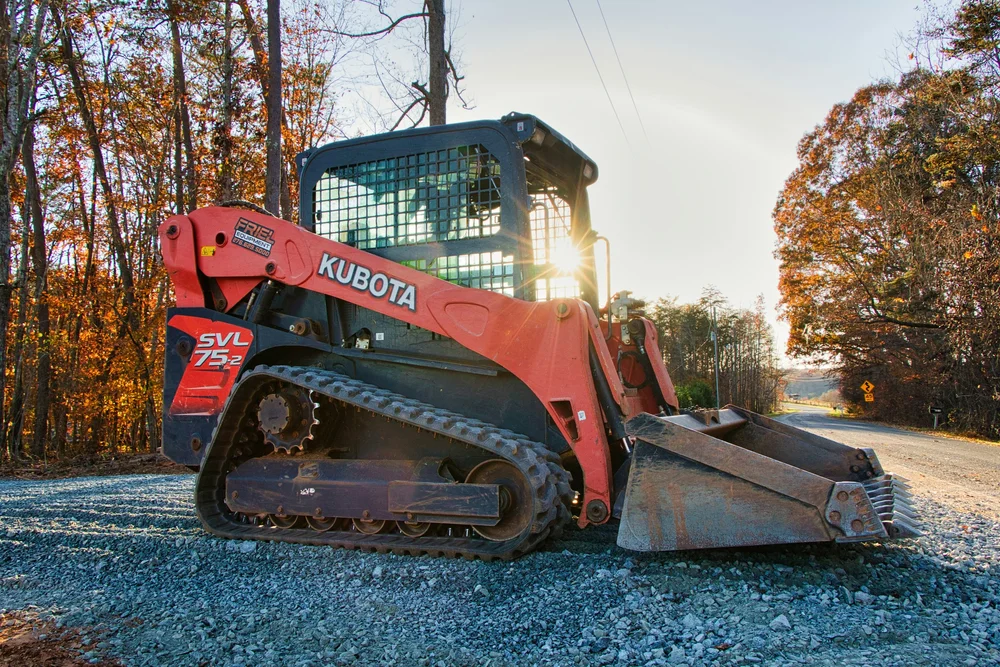
Photo by Chandler Cruttenden on Unsplash
“A bucket digs in because that is what a bucket is for, and a blade is shaped to refuse”
Two attachments that both push, with opposite instincts
Australian yards, laneways, and stockyards get their heavy tidying done as winter ends and the ground firms up. A dozer blade and a loader bucket both push material along the ground, and they behave completely differently while doing it.
A bucket has a cutting edge angled to enter the ground, because filling it is the whole point. Pushing with one means constantly correcting the tilt to stop it digging in, and the operator spends the job managing the tool rather than the material.
That difference is visible in the profile. A bucket edge sits at a positive angle to the ground and a blade edge sits close to vertical or slightly back, which is what makes one dig and the other skim.
Skid steer dozer blade versus bucket is a question about intent
A blade is a flat mouldboard with an edge designed to skim rather than penetrate. It carries material in front of it and lets the surface pass underneath, which is what pushing actually requires and what a bucket resists.
Volume is the other difference. A bucket fills and stops, and a blade builds a roll of material ahead of it that keeps moving as long as the machine does, which is why a blade shifts far more over a distance than a bucket ever will.
A roll of material ahead of the blade is doing the work
Once material builds into a rolling mass in front of the mouldboard, it carries additional material along with it rather than being pushed as a static pile. Keeping that roll intact is what an experienced operator is actually managing.
Dozer blade skid shoes are what set the working height
Adjustable shoes at each end carry the blade a set distance above the surface. That gap decides whether the edge scrapes to bare ground, leaves a thin layer behind, or floats above a finished surface without touching it.
Shoes wear and need checking. A worn shoe drops that end of the blade, which puts the edge into the ground on one side only and produces a cut that is deeper at one end than the other.
Getting it wrong in either direction is obvious immediately. Set too low, the edge gouges and the machine loses traction; set too high, the blade rides over the material it was meant to move and pushes nothing.
Concrete and compacted yards need the shoes down
Scraping a slab with the edge hard against it wears the cutting edge quickly and damages the surface. Shoes holding the blade a few millimetres clear let it clean a yard without either, which matters where the same yard is scraped weekly.
Thirty degrees of angle turns pushing into moving
A blade square to travel builds material until it spills over both ends. Angled, the material slides along the mouldboard and leaves at one end continuously, which means it can be carried sideways rather than simply piled ahead.
Angle also decides how hard the machine works
An angled blade presents a smaller effective width to the direction of travel, so the loader pushes less material at once and keeps moving. Square to travel it takes the full width, which is what stalls a machine on the first pass.
That is the difference between clearing an area and shaping one. A 72 inch dozer blade angled and driven along a line moves material to one side in a windrow, which is how a laneway is crowned or a yard is cleaned toward one corner.
Cleaning stockyards is the job it does best
Manure and bedding are exactly what a blade handles well, being loose, bulky, and needing to travel a distance rather than be lifted. Angling the blade lets an operator run the length of a shed and leave everything at one end for a loader to pick up.
Rubber edges are worth considering for that work. A rubber edge follows an uneven concrete floor without gouging, cleans more completely than steel on a rough surface, and does not spark against a slab full of embedded stone.
They wear faster than steel and cost less to replace, which suits a yard that is scraped weekly rather than a paddock that is graded twice a year.
Bolt-on edges are consumables and should be treated as such
The edge is a replaceable strip rather than part of the mouldboard, because it is the part that wears. Running it past its life means wearing into the blade itself, which is a repair rather than a replacement.
Drainage work is where the angle earns most
Table drains and paddock runoffs silt up over a wet winter, and a blade angled to throw material to one side cleans a shallow drain in a single pass. Doing the same with a bucket means digging, lifting, and finding somewhere to put each load.
Downhill is the direction to push
Material rolls forward more easily with gravity helping, and the machine has traction to spare. Pushing uphill loads the tracks or wheels at the same time as the blade, and a loader that spins is not moving anything at all.
Small cuts move more than deep ones
An operator taking a shallow bite keeps the roll of material moving and the machine driving. A deep cut fills the blade instantly, stalls forward motion, and produces a pile that then has to be pushed again from a standstill.
Depth is set by the shoes rather than by the arms on most passes, so the operator is choosing a speed and a line rather than continuously adjusting height, which is what makes the work repeatable across a long yard.
Attachments divide by whether they penetrate
Bucket: enters the ground, fills and lifts
Dozer blade: skims, carries material ahead
Grader blade: shapes a surface to a profile
Where a blade pays and where it does not
Strength: moves bulk material over a distance
Strength: cleans yards without gouging the surface
Limit: cannot lift or load anything
Limit: needs somewhere for the material to end up
Weighed against a bucket, a blade costs the ability to load and returns several times the material moved per hour. A grazier near Wagga cleans his yards with the blade and only fits the bucket when the heap has to go on a truck.
Yard work is being matched to purpose built tools
Operators increasingly keep several fronts for a loader rather than doing everything with a bucket, having found that the general purpose tool is slower at every specific job than the attachment shaped for it.
That way of equipping a machine is why the machinery attachments TMG Industrial supplies are described by the motion they suit rather than by the volume they hold.
from Review Blog https://ift.tt/bq6VCT1


No comments:
Post a Comment