Go to Blogger edit html and find these sentences.Now replace these sentences with your own descriptions.This theme is Bloggerized by NewBloggerThemes.com.
Go to Blogger edit html and find these sentences.Now replace these sentences with your own descriptions.This theme is Bloggerized by NewBloggerThemes.com.
Go to Blogger edit html and find these sentences.Now replace these sentences with your own descriptions.This theme is Bloggerized by NewBloggerThemes.com.
Go to Blogger edit html and find these sentences.Now replace these sentences with your own descriptions.This theme is Bloggerized by NewBloggerThemes.com.
Go to Blogger edit html and find these sentences.Now replace these sentences with your own descriptions.This theme is Bloggerized by NewBloggerThemes.com.
For their 248th episode, two nostalgic film critics, two transforming dads, and two Energon-powered school teachers, Will Johnson and Don Shanahan, celebrate the 40th anniversary of the seminal animated cult classic, The Transformers: The Movie. They remember where they were and how they felt when Optimus Prime died. Returning to also participate in the group grieving session is Mark Krawczyk of the Spoiler Room podcast and Special Mark Productions. Come learn more and stay for the mutual love and respect that fun movies encapsulate. Enjoy our podcast!
Cinephile Hissy Fit is an Astra Award-losing Film Obsessive media podcast, brought to you by the Ruminations Radio Network, and a member of the Critics Choice Podcast Network. Please visit, rate, review and subscribe. If you enjoyed this show, we have more where that came from, with interesting hosts, and wonderful guests. All are available on iTunes, Spotify, and anywhere you find your favorite shows. Follow the show on Twitter at @CinephileFit and on Facebook. Also, find both Will Johnson and Don Shanahan on Letterboxd as they accumulate their viewings and build their ranks and lists. Lastly, check out their TeePublic store for merchandise options from stickers to t-shirts!
Thank you so much for your captive audience and social media participation! Enjoy our new podcast episode!
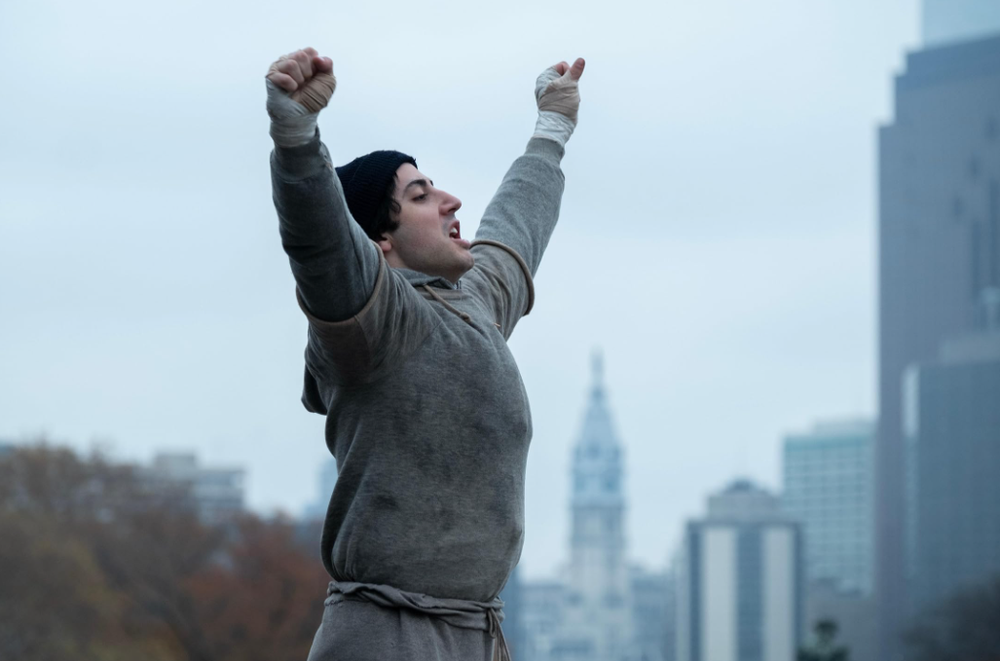
When it comes to rewatchable classics like Rocky, those movies have memorable high-point moments we cherish, which have been etched into our hearts and memories. Jukebox musical films and music biopics feed off this type of “greatest hits” energy too. Audiences, reveling in the familiar euphoria, sometimes want to think the behind-the-scenes efforts that made those iconic superstar moments or iconic songs were equally magical. I Play Rocky is a sharp and poignant example of that match not always being the case.
LESSON #1: MEMORABLE MOMENTS AT THE CREATIVE STAGE— Sometimes, just getting to the recording studio or scratching together the resources to even get to an independent film set for a camera roll was the more evocative journey than cranking out a would-be all-time hit or highlight. For all we know, those climaxes might have been the easiest or most nondescript days of work from the entire creative stage. Peter Farrelly’s film fleshes out that distinction between the stuff that was made to awe audiences and the underlying labor-of-love efforts others never knew or saw. Witnessing this side of the story as a semi-historical companion piece only makes one’s overall appreciation for all things Rocky and I Play Rocky grow.
With the supposed approval of Sylvester Stallone but not his involvement as a consultant or producer, I Play Rocky opens by recounting the star’s early days as a struggling actor under the stage name of “Mike” in New York City in the mid-1970s. Played with mirror-like emulation and chiseled respect by relative newcomer Anthony Ippolito, Sylvester chases casting calls and occasionally seedy uncredited roles for cash while adopting Butkus, the discarded bull mastiff pup, seeking the approval of his father, Frank (Matt Dillon, in an extended cameo), and wooing Sasha Czack (AnnaSophia Robb of Rebel Ridge and a long way grown up from Bridge to Terabithia and Soul Surfer), who would become his first wife. Soon, the newlywed couple moves to Los Angeles in hopes of improving their mutual careers and being closer to Sylvester’s Tinseltown dreams.
LESSON #2: WRITE YOUR OWN OPPORTUNITY— For a few years, all the scenery change in I Play Rocky amassed was more dead-end jobs and dwindling prospects of getting cast for anything viable. Looking to shake the “bum” and “goombah” labels—slurred voice grief included—he constantly receives from folks judging a book by its cover, Stallone becomes motivated to write his own foot-in-the-door by dabbling in screenwriting “since they’re never going to give him anything.” That effort is fostered further after getting connected to enterprising film producers Irwin Winkler (The Wolf of Wall Street’s P. J. Byrne) and Robert Chartoff (Toby Kebbell, returning to the big screen after expanding his resume on television), living off the Academy Award-nominated credibility of 1969’s They Shoot Horses, Don’t They? Little interest materializes from his first few scripts.
Inspired by watching the notable 1975 championship boxing match where heavy underdog Chuck Wepner took incumbent heavyweight champion Muhammad Ali 15 rounds before succumbing to a technical knockout, Sylvester finds his creative catalyst. In a three-and-a-half-day binge, he furiously writes the script for Rocky, pouring in personal parallels of his own life story distilled through the Rocky Balboa character and his perilous path towards finding love with Adrian Pennino and a date in the ring with the fictional champion Apollo Creed. Finally, Winkler and Chartoff feel the power of the story and Stallone’s work.
LESSON #3: THE ULTIMATE “BET ON YOURSELF” MOVE—The filmmakers and big-wig studio exec, Sandy Maddox (a composite character played by Tracy Letts, echoing his gatekeeper red ass role from Little Women), see gold and want to make a substantial offer to buy the script as a star vehicle for a bigger name like Ryan O’Neal, James Caan, or Burt Reynolds. Crazily, Stallone stands pat in the face of life-changing money with the titular reply of the film’s title, insisting the only deal he will accept is if he plays the lead role. Much of the second act of I Play Rocky is watching this “bet on yourself” move come to fruition under Stallone’s self-guiding principles of “If you don’t believe in yourself, how else are you going to get anyone to believe in you?” and “I’d rather be an optimist and be wrong than a pessimist and be right.” Those repeated, simple chestnuts glow well in the film.
From there, I Play Rocky leaps into many of the notoriously cut corners of the film’s turbulent all-hands-on-deck Philadelphia film production, made on the shoestring-of-a-shoestring’s budget and carrying the doomed expectancy of Sylvester’s failure. This is where Farrelly, the two-time Academy Award winner from Green Book, directing from an equally-from-obscurity script by feature first-timer Peter Gamble, presents a collection of those Rocky scenes we know and remember from different perspectives. Like the assertion of Rocky’s guerrilla director John G. Avildsen, played very strongly in the film by mumblecore gold standard and fellow film director Jay Duplass (The Baltimorons), the boxing is extremely secondary. In what may be a disappointing surprise to many, those looking for extensive duels between Anthony Ippolito and If Beale Street Could Talk’s Stephan James playing Carl Weathers are gazing past where other turning points occurred.
Calling back to Lesson #1, the highlights here in I Play Rocky are not from where you expect. While we’re still jogging through the streets amidst the citizen extras and ascending the towering outdoor steps of the Philadelphia Museum of Art, those shooting days, for example, were as much about proving the proficiency of the then-new Steadicam technology of cameraman Garrett Brown (played by working operator Michael Fuchs, getting to be in front of the camera for a change) and how that innovation saved the production a huge amount of money and time by the capability to film compactly in big and small locations, therefore skipping the tedious need for expensive dolly tracks or crane shots. In the same vein, I Play Rocky shows how the meat locker location almost got the production shut down by angry unions and how the pivotal ice rink courtship scene was almost cut for budgetary reasons. That unforgettable Bill Conti score we still blare at athletic events was a finishing touch added long after the cameras stopped rolling. Rather than borrow that, I Play Rocky lets the groovy soundtrack by Andrew Bird support its more meager ambience.
Little on-set victories like those—or domestic moments like putting pen to paper on a contract on a humble kitchen table instead of in front of magazine flashbulbs for the trades or having the money to buy back your trusty dog you sold when you were broke—are the fascinating developments that are made moving and important by I Play Rocky and its immersive insider point-of-view. The film’s one place where its own “Now we got it!” peak matches Rocky’s is watching Anthony Ippolito, as Sly, trying to find the right words and unscripted tone for Rocky Balboa’s angrily shouted monologue to Mickey. The inspirational sweep is built in the layers of knowing we’re watching the culmination of Sylvester’s own story, the core of Rocky’s story that embodies him, and now Anthony layer as a virtually unknown actor recreating it for respectful and motivational accuracy. When Ippolito brings “it” and nails that scene, just as Stallone did fifty years ago, the shockwave is a roaring announcement of talent. The 26-year-old deserves the Oscar nomination that is coming to him.
Even if dramatic license is inflating the true history in plenty of places into a tall tale fit for its own Hollywood movie—something suggested by Johnny Carson in 1976 to Sylvester Stallone on the late-night couch of The Tonight Show and presented after this film as a post-credits archival easter egg—the meta goal of weaving one legend out of another is tremendously successful. Living in the aura where Johnny said, “people wouldn’t believe it,” to which Stallone answered the ordeal as “blissful stupidity,” I Play Rocky finds its own poignancy and reverent specialness in bowing before the quintessential film business underdog story. Farelly and company knew what they were doing. You’re going to come out of this movie primed and ready to watch the real thing, so go ahead and indulge in that adoration.
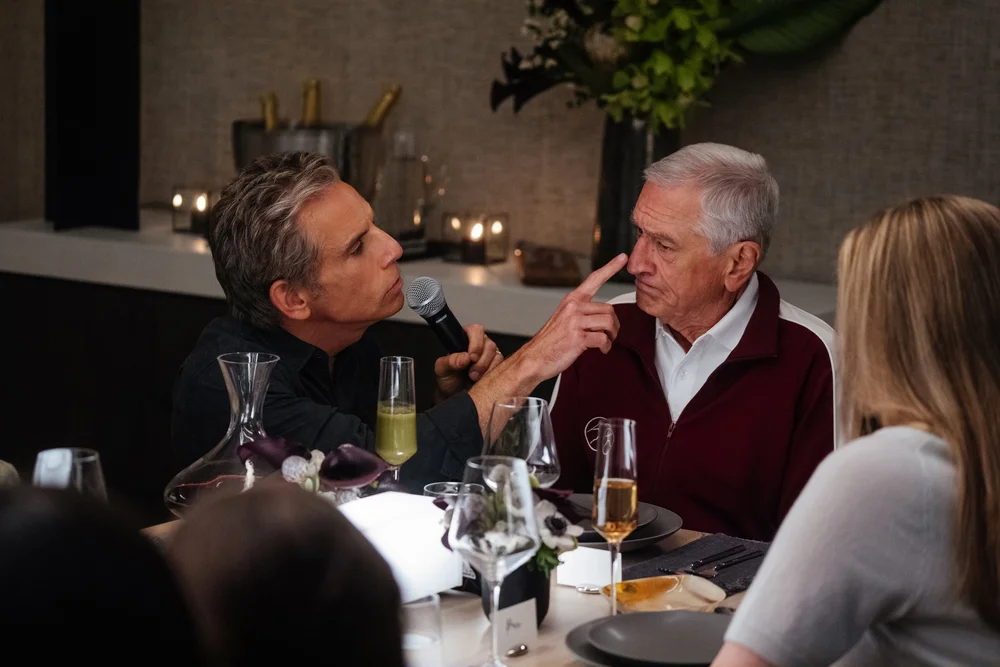
When it comes to returning to a franchise for the borderline legacy sequel Focker-in-Law, one of the substantial knocks or doubts is the concept of fatigue. It’s been 26 years since Meet the Parents kicked off the rivalry between Robert De Niro’s father-in-law, Jack Byrnes, and Ben Stiller’s new family addition, Gaylord “Greg” Focker. Bob is 83, and Ben will be 61 next week. How tired are they at their own ages? Hollywood makeup can fix and forgive those physical blemishes in a jiffy. However, no concealer on the market can remedy the nonmaterial trait of humor.
The jokes are—and always have been—the true face of this series, meaning the bigger questions of tiredness lie in the possible plot of Focker-in-Law. What’s there left to tell in a fourth movie 26 years later? Like a hurdle of many comedies, are the funny bits instantly dated new humor that expires faster than milk left out on a hot, sunny day? From the other side, as a long-distance sequel, how tired are the repeated gags and callbacks to previous movies? Are they leaned on as a crutch, therefore making the audience tired of seeing the same stuff again?
LESSON #1: BRINGING VITALITY TO POSSIBLE FATIGUE— Since Meet the Parents, people have come to enjoy this franchise’s signature brushstrokes of making cringe comedy sympathetic and relatable, even if it takes place in the safe bastions of white privilege. Much to its credit, Focker-in-Law brings equal measures of new vitality and rested liveliness to this fourth installment. In a very old-school Olive Garden way of “When you’re here, you’re family,” what folks loved back then still applies now as fresh cast members and a dash of “absence makes the heart grow fonder” magic infuse Focker-in-Law with the energy to entertain new and returning fans.
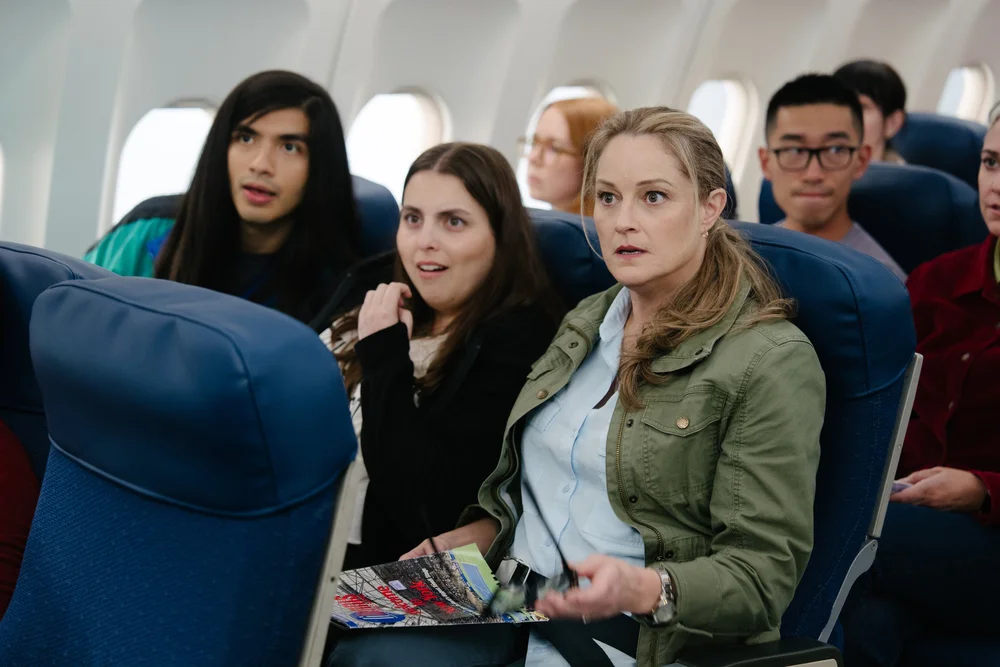
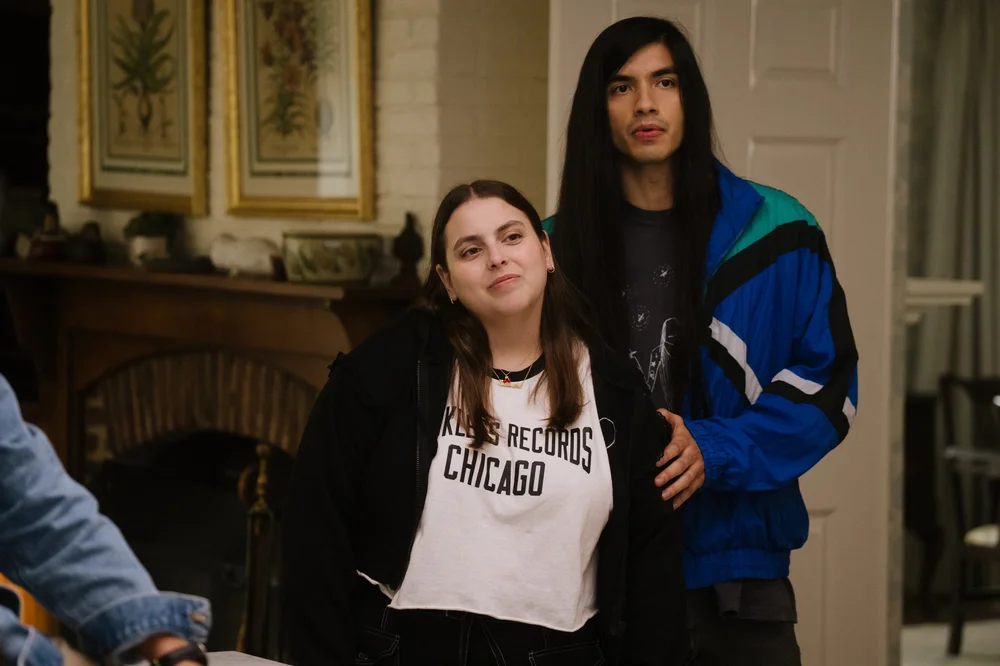
In the accelerated years since Little Fockers, the twin children of Greg and Pam Focker, Henry and Samantha (played by former Booksmart co-stars Skyler Gisondo and Beanie Feldstein), have grown into twentysomethings trying to find personal and career independence. Samantha predominantly still lives at the family’s Chicago home with her welcomed long-term boyfriend, Eduardo (fellow Booksmart alum and Stranger Things cast member Eduardo Franco). Meanwhile, Henry has been living in San Diego while deciding which medical school to attend to follow in his nurse father’s footsteps.
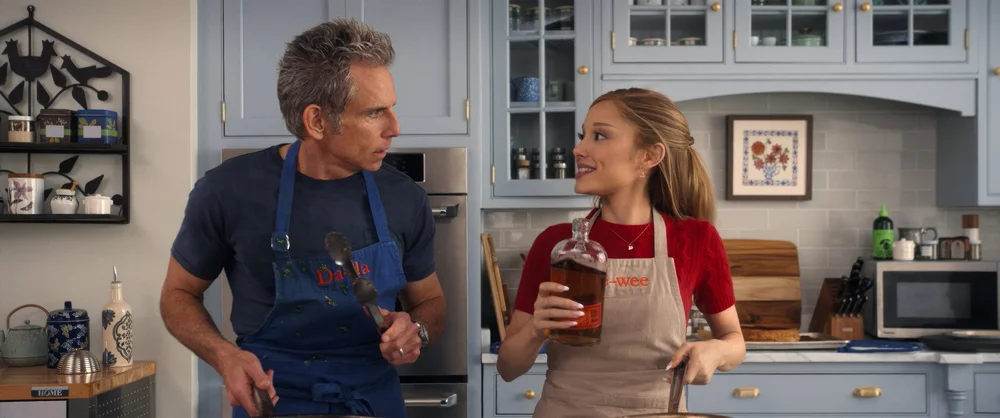
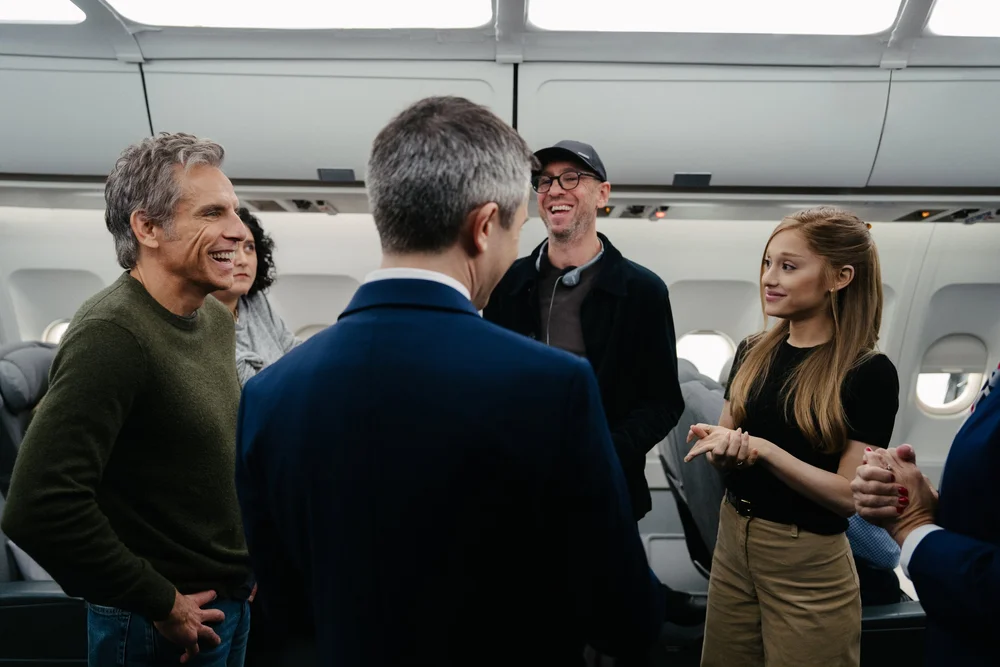
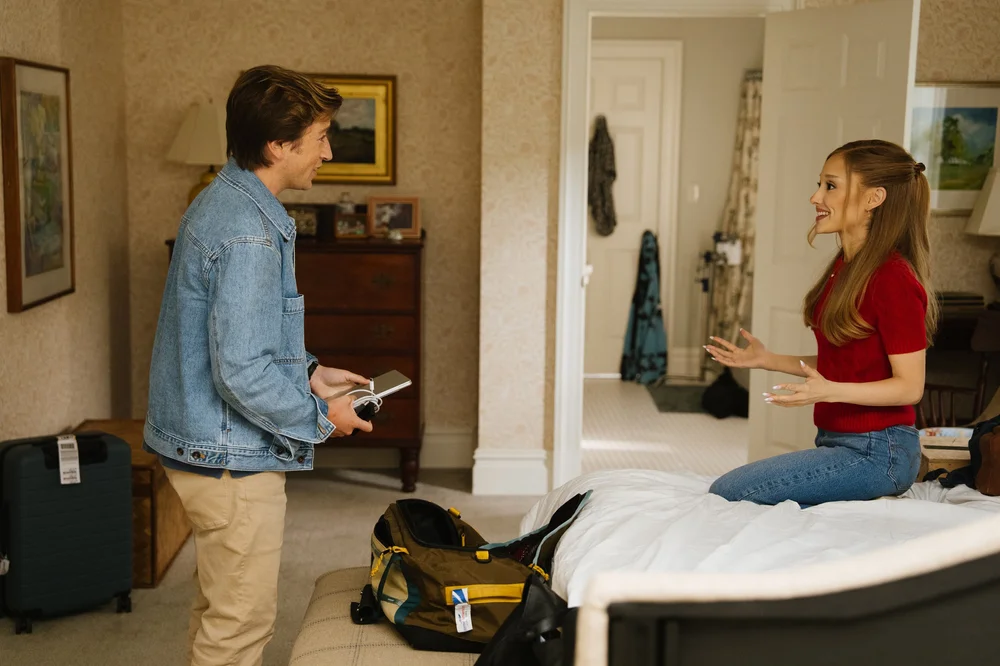
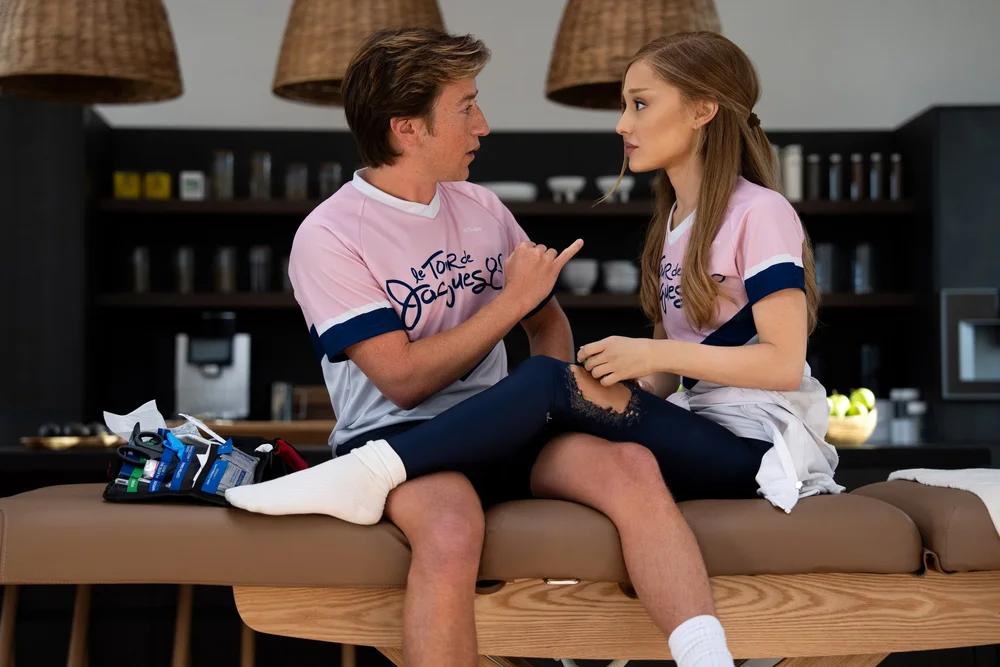
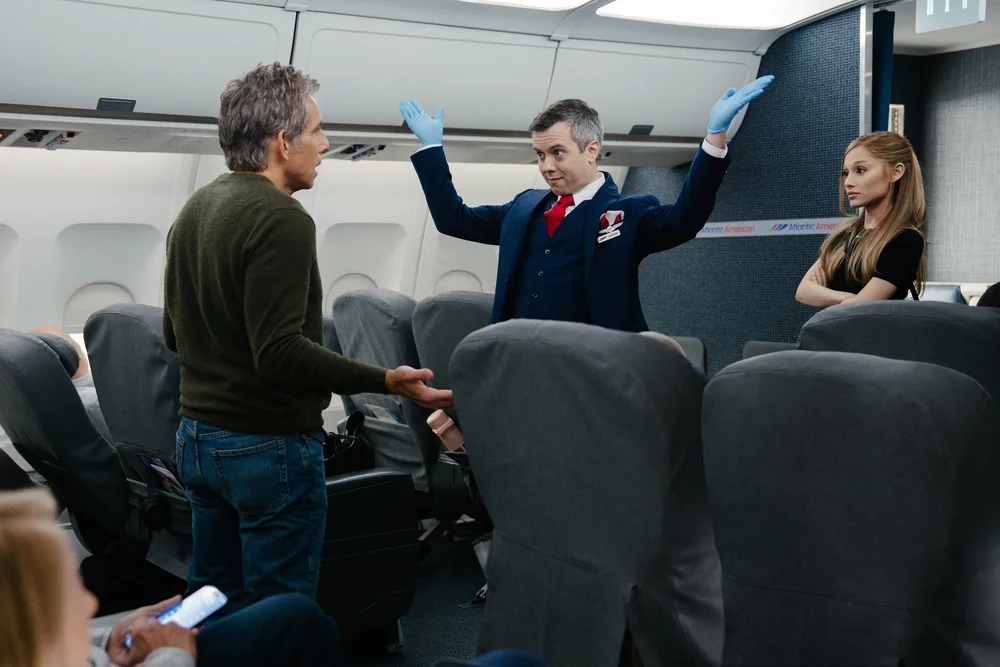
The top reasons for that noncommittal stance—lurking in the background of dramatic irony in Focker-in-Law—are Henry’s wonderful girlfriend, Olivia Jones, a confident corporate life coach played by the co-headlining Ariana Grande, and the steady, settled life they have in California. Henry is ready, even after a few months, to pop the question. He is bringing her home to meet the family while everyone is gathering out east for Jack Byrne’s 80th birthday. Echoing Meet the Parents, the Byrnes' house, which still haunts and dysregulates Greg to this day, becomes the setting for introductions, interrogations, and increasingly taller falling dominoes of poor choices.
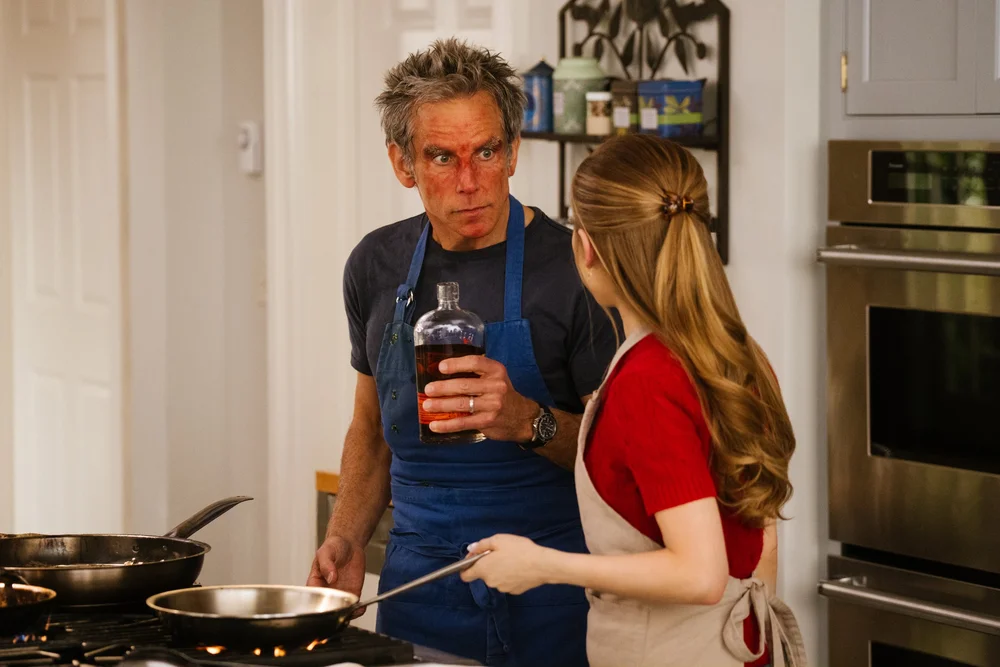
LESSON #2: THE CLASSIC SMOTHERING PARENT— It becomes apparent very quickly that, well-intentioned as he may be, Ben Stiller’s Greg Focker is the closest thing to a villain in Focker-in-Law. With all the helicopter-flying and boundary-blurring attributes, he is the prototypical smothering parent dialed to 12. With Samantha still under his roof, his “Fockerizing” has him still packing her luggage and catering to needs she should be adult enough to handle. As for Henry, the overprotective Greg clings to the hope that Henry will come back to the Windy City and work at the same hospital as him, a prospect his son has not entirely agreed to. When Greg finds out about the upcoming marriage proposal, he shadily works in the background to slow or downright thwart that big moment.
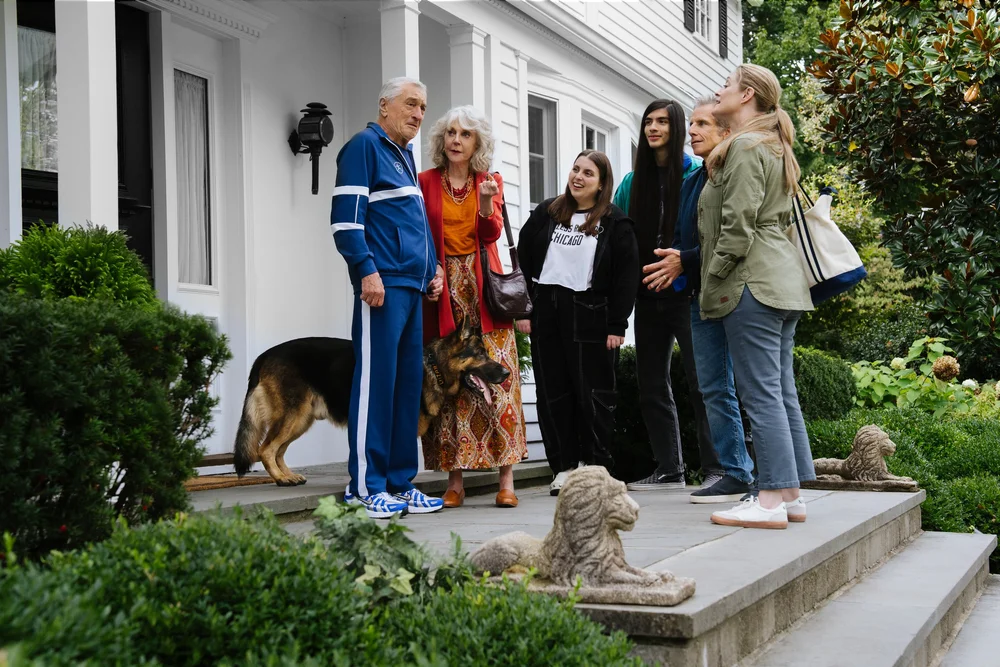
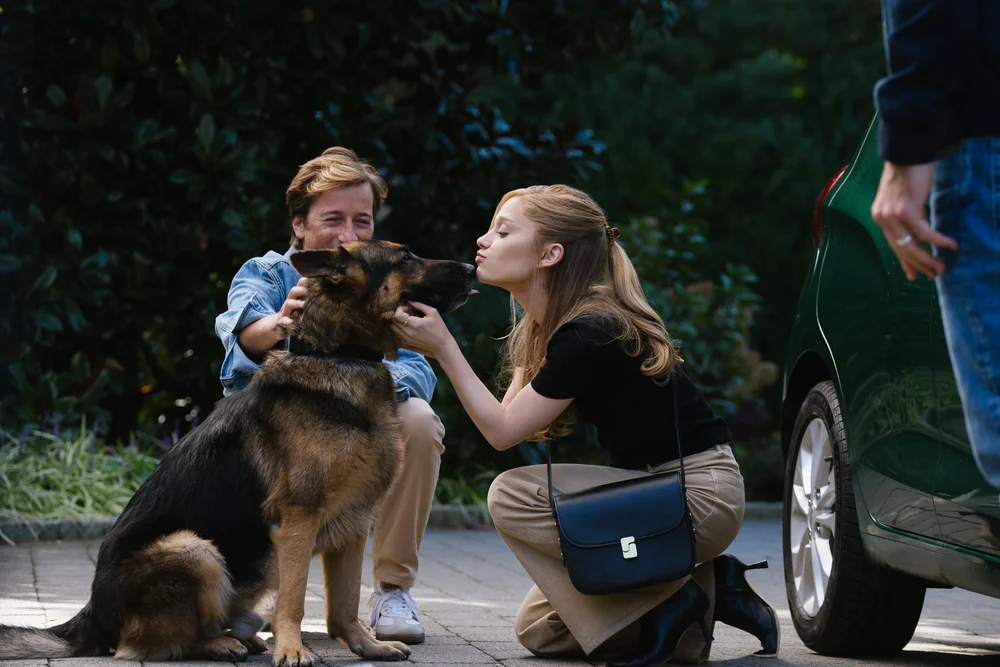
LESSON #3: JUST TELL THE TRUTH— In a way, the maelstrom of mistakes that follow in Focker-in-Law are Greg’s usual foibles of insecurity. Greg’s number one weapon for being the culprit of Lesson #2 is lying through his teeth while putting a DSW’s worth of feet in his mouth. The character foil against that remains Robert De Niro’s ex-CIA agent and non-word-mincing father-in-law. He still touts, as he should, the value of honesty, a moral matched by a kindred spirit and instant new member of the “Circle of Trust” when Olivia is revealed to be a former FBI hostage negotiator. Somehow, after all these years of acceptance and success, Greg will still multiply lies wildly when frazzled. Those self-inflicted pickles lead to screwball hijinks and our laughs, yet, simultaneously, they are a flaw he should know by now that doesn’t do him any good, especially with double the watchdogs in Jack and Olivia (and triple if you count Jack’s new ex-police German shepherd pet) this time around. Sitting and watching the narrative play out, you want to shake sense into Greg to just tell the truth and endure the tough and necessary conversations.
As has become the norm in the Fockers series, the obstacles arise from a host of inconvenient interruptions, unplanned pauses, and a patchwork of compounded lies that play out around set pieces of slapstick humor and cringe comedy tension. Like a lit firework rising in the sky, we can see the explosion coming and relish in the curiosity of how grand, colorful, and destructive the display will be. Nothing quite matches the 2000 original for laugh-out-loud shock value, as time has tamed what’s kosher or inappropriate to make fun of and clinically redefined them as problematic microaggressions. That said, the typical course of subtle error build-up, final catastrophe, just-in-time apologies, and a wrap-up denouement of mutual forgiveness remains plainly effective.
If anything, the two qualities that pep up the formula of Focker-in-Law are the previously teased distinctions of new faces and the convenient passage of time. On the fresh front, this is Skyler Gisondo and Ariana Grande’s show as much as Stiller and De Niro’s, and the two have decent chemistry together. The biggest decisive moments belong to them, and youthful vigor also plays a role in Eduardo Franco replacing the previous (and still returning) Owen Wilson in the requisite scene-stealer slot. While director John Hamburg (Along Came Polly and I Love You, Man) has been with this series since the beginning as its chief writer, the incisive presence of Broad City’s Ilana Glazer and Austen Earl of Happy Together on the story credits clearly bolstered the final screenplay.
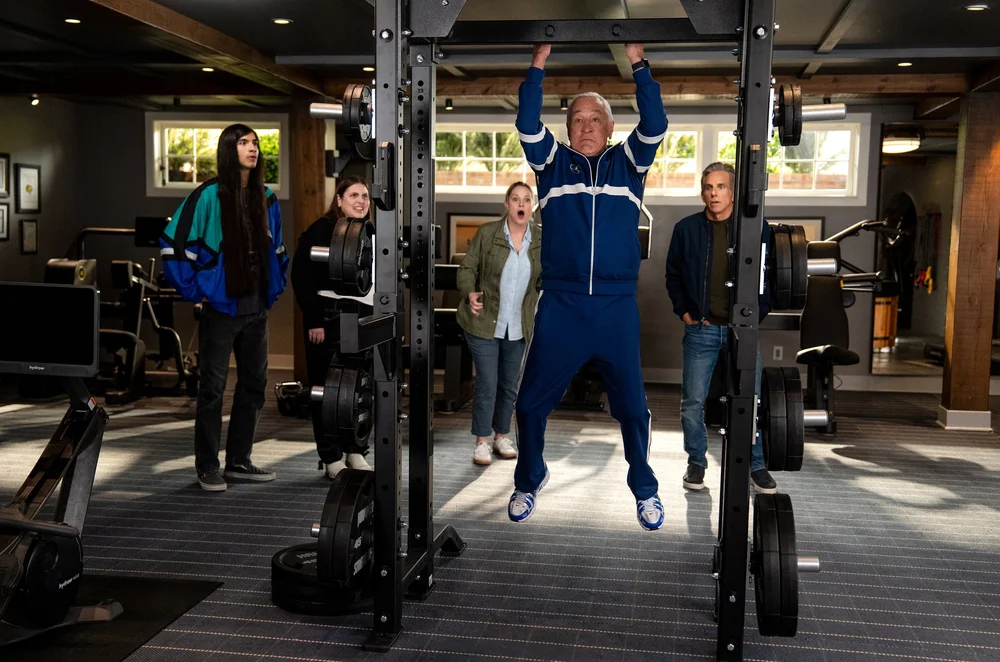
LESSON #4: WE WERE RESTED AND READY FOR THIS— As for the notion of time, normally, nostalgia can be manipulated, forced, or overused nowadays. Here in Focker-in-Law, it’s a worthwhile strength, as enough time has passed to have us rested and ready for this combined family again. Robert De Niro, somewhat overplaying a health kick for his Jack Byrnes character, has graduated from being the movie’s heavy into becoming the senior voice of reason, a sweet shift in his overall dynamic. For folks with a short memory, it’s been nine years since Ben Stiller was a lead in a mainstream film, dating back to Brad’s Status and The Meyerowitz Stories, and even longer for Teri Polo. The latter, unfortunately, doesn’t get much of anything of consequence to do other than roll her eyes and rein in her on-screen husband. But, unshy from the creases and the gleaming gray of age, it’s a treat to see Stiller show his fullest chops again.
Naturally, another sequel is teased to follow Focker-in-Law down the road, which turns the attention to meeting Olivia’s parents. Like the perfect gets that were Dustin Hoffman and Barbra Streisand 22 years ago in Meet the Fockers, go ahead and start the stunt casting now for who could be Ariana Grande’s mentioned-but-unseen fighter pilot mother and likely equally dashing father. Just to put this out there, my knee-jerk fantasy is Demi Moore and Tom Cruise, which would be an A Few Good Men reunion and also bring back the 2000 MTV Movie Awards stunt double bit and Tropic Thunder ball-busting potential between buddies Cruise and Stiller. These are the exciting payoffs and easy comforts folks come to see, and we’d gladly take another wedding movie where everything goes wrong before being made right. Let’s make it happen.
THE FURTHER MIS-ADVENTURES OF CLIFF BOOTH— 5 STARS
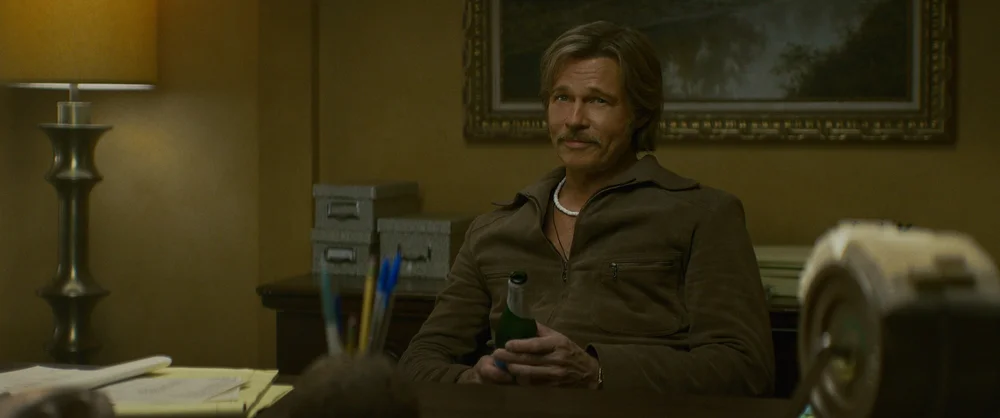
Who would you rather spend most of your time with from Once Upon a Time… in Hollywood: the soon-to-be washed-up TV actor with insecurities stacked higher than an IHOP stack of pancakes, or the laid-back, cool-as-a-cucumber stuntman flanked by a trusty dog? Be honest with yourself. Brad Pitt was the best part and rightfully won the Oscar for it. His Cliff Booth has the choicest lines, the most rewatchable parts, and is, far and away, the better man of action. If anything, the headlining Leonardo DiCaprio’s Rick Dalton gets in the way, instead of the other way around.
LESSON #1: GIVE US MORE OF THE BEST PART— Since we can’t and— to avoid an unnecessary trip to the cinema dunce hat chair with such a thought—shouldn’t edit Leonardo DiCaprio out of an overlong and sometimes clunky slog (yeah, I said it, twice) of the 2019 Quentin Tarantino movie, The Further Mis-Adventures of Cliff Booth gives us what many were craving and what a sizable contingent of another demographic were straight-up thirsting for. This sequel doubles the budget and graduates the supporting buddy of the first movie into the dream-fulfillment lead. Reteaming each with director David Fincher and writer Quentin Tarantino for the fourth time in his career, the full galvanic voltage of Brad Pitt is unleashed with a level of coolness that could turn magma into gazpacho.
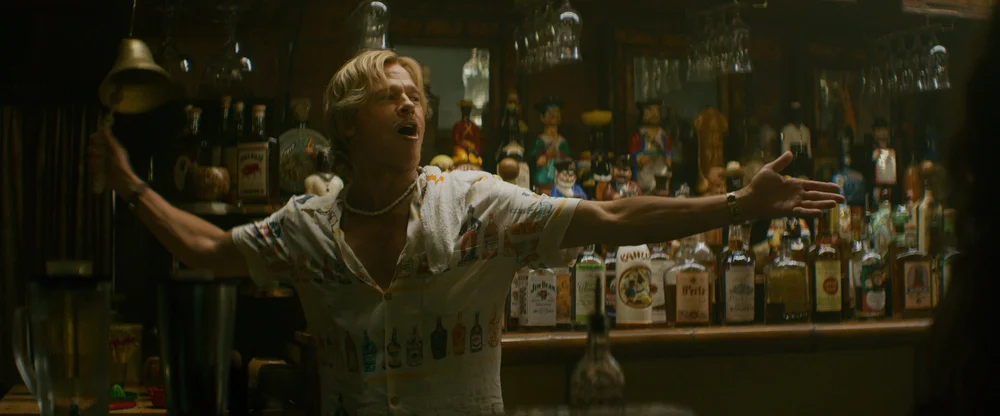
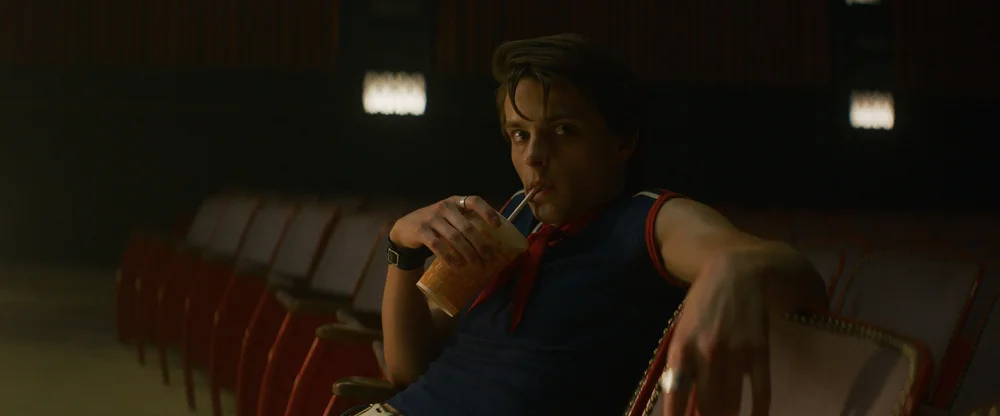
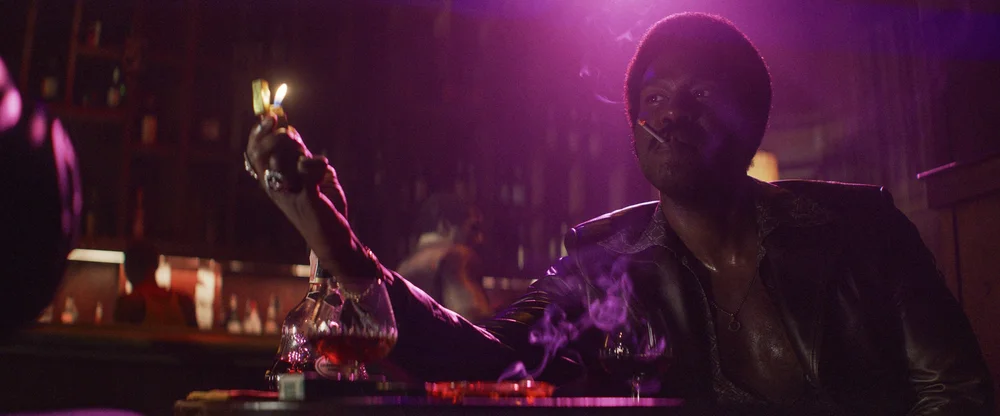
Covering about a five-day stretch of time in June of 1977, The Further Mis-Adventures of Cliff Booth reintroduces the title figure to viewers working the projection booth at the New Beverly Theatre in Beverly Hills for a midnight blaxploitation movie starring Rodrick “Hot Rod” Harrison (Aquaman heel Yahya Abdul-Mateen II). Echoing a previous setting of chicanery shared between Fincher and Pitt from Fight Club, Cliff loves this gig—one of many odd jobs the film will show to fill the dashing man’s exploits—as he rotates between swilling soda and Old Chattanooga Beer, maintaining the reels and lip-syncing line after line of a monologue of explicit seduction instructions from the on-screen movie.
What really has Cliff staying after closing time is to meet up with two thieves (Anora’s Karren Karagulian and Corey Fogelmanis of Ma) for a payoff exchange after shaking down a film director friend of Cliff’s for some stolen personal effects, including his Oscar statue. The manner in which Cliff Booth sizes up and ultimately handles this situation establishes the character and the film’s comfort with flipping a switch to violence if the frivolity needs to be broken. It also demonstrably shows another type of work that, when necessary and built on the lore of his 1969 clash with members of the Manson Family with Rick Dalton, can butter his bread and replenish his wallet.
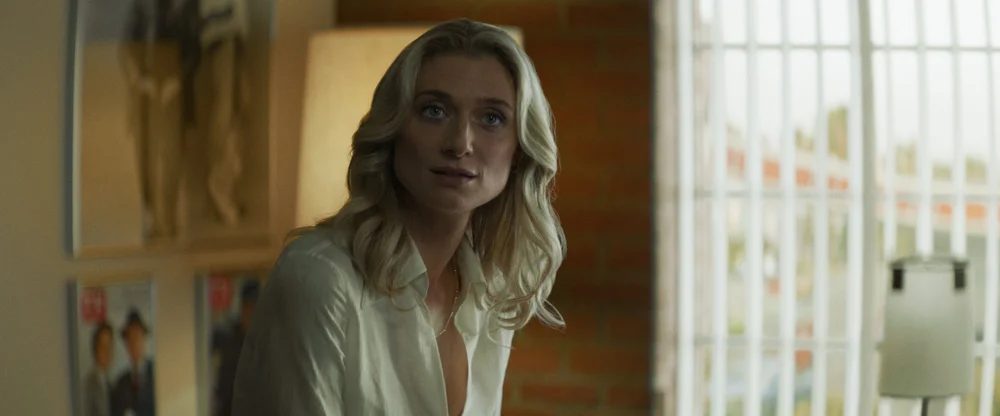
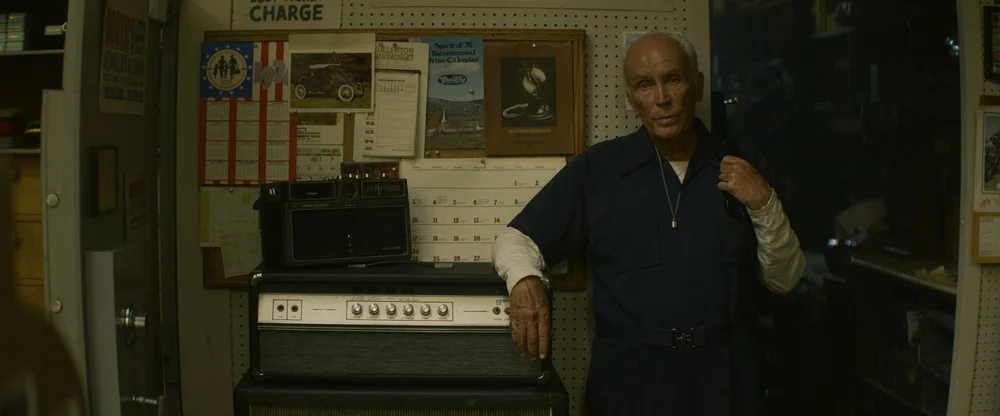
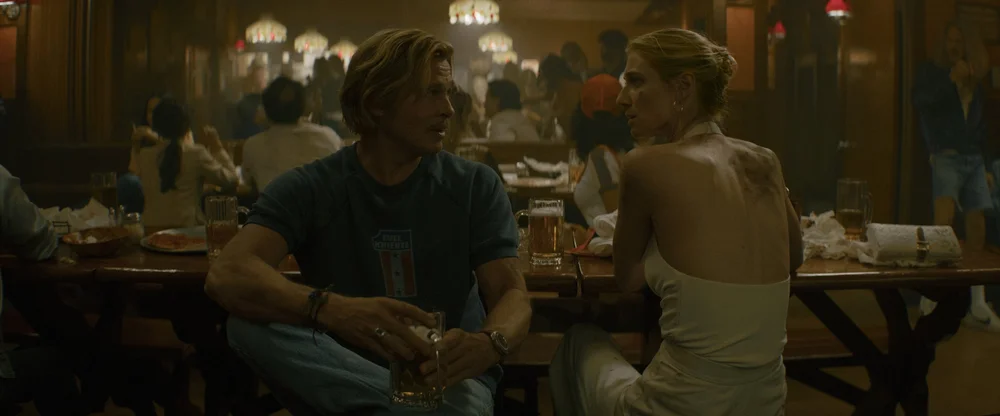
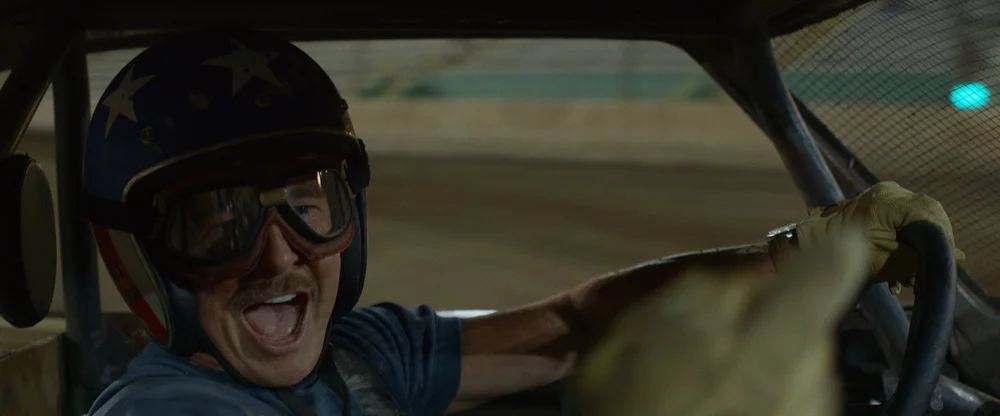
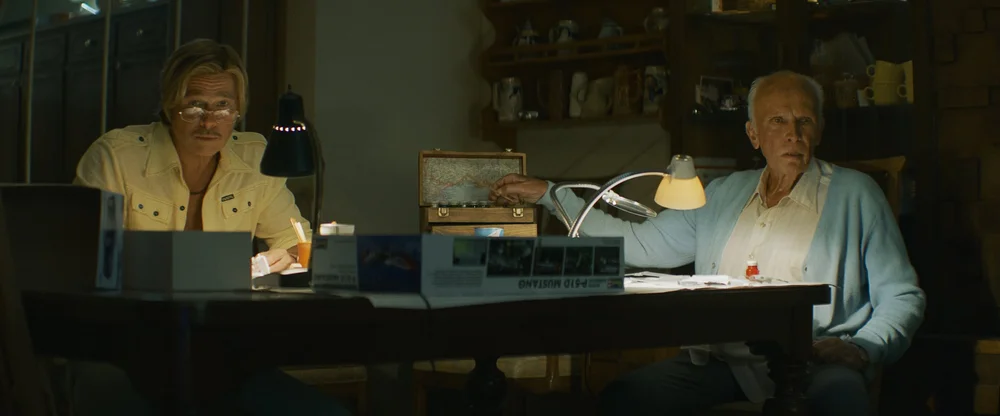
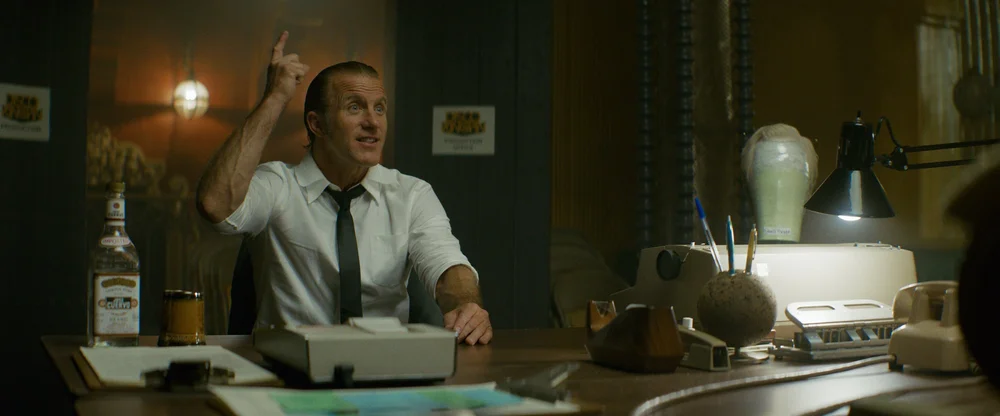
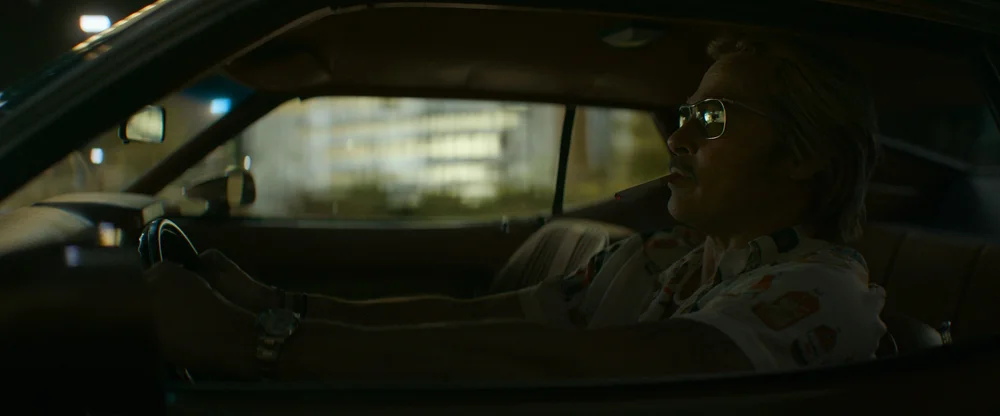
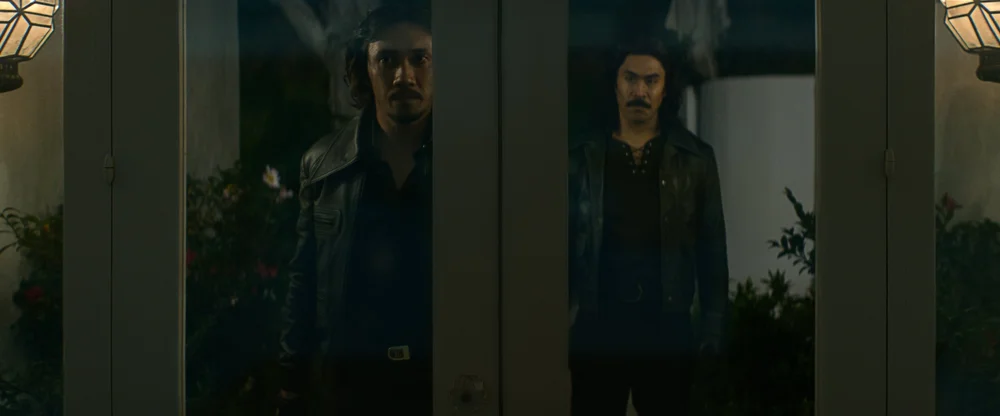
Ultimately, one more dangerous and private pickle requires Cliff’s skill set, discretion, and handsomely paid assistance. This multi-layered mess involves popular TV star Charlie Peters (Hawaii Five-0’s Scott Caan, looking hauntingly more like his dad with each passing year), his retired actress wife Toni (the ageless Carla Gugino), and a pair of badass hammer-wielding Filipino assassins (the frightening fresh faces of JB Tadena and Matt Groove). Cliff’s point of contact in meeting Peters—and instant new object of affection— is Charlie’s agent and mouthpiece, Karen Crosby (Elizabeth Debicki, also enjoying the run of Wicker this awards season). The two of them making appointments and spending time together pulls her—and us—into Cliff’s wide world, where he lives in Marina del Rey with his testy father Gus (Robocop himself, Peter Weller), races figure-8 demo derbies, and tends bar at a popular tiki lounge.
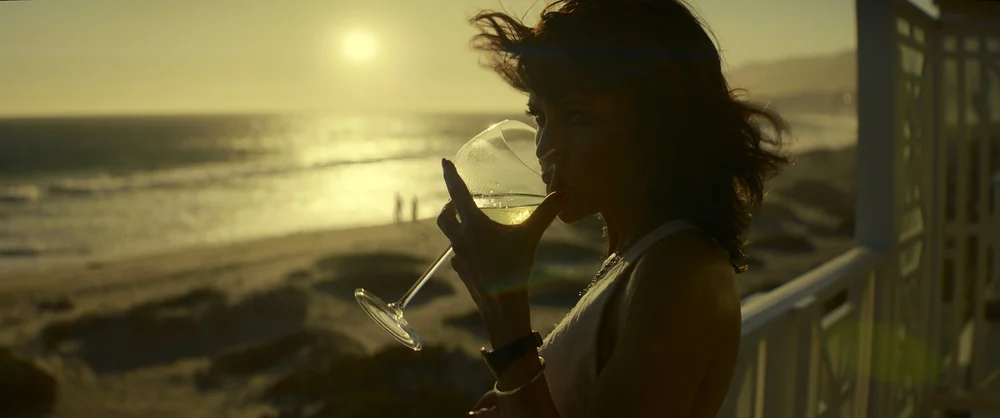
LESSON #2: CAN WE STAY IN THIS SEEDY FAIRY TALE FOREVER?—At this point of The Further Mis-Adventures of Cliff Booth, we couldn’t be more comfortable with the ambiance of this movie, even with the ominous threat getting closer as the week progresses. Many would gladly spend the entire running time of the film cracking a beer at the New Beverly, painting model airplanes with Gus as old movies play on the TV, giving and receiving Brian Flanigan-level “fuck me eyes” over margaritas at the beachside bar, and openly flirting with Karen Crosby. Like Once Upon a Time…in Hollywood, this is a combination of a selectively rose-colored time capsule to the late-1970s culture with Brut cologne, booze, a dynamite playlist, and plumes of cigarette smoke blurring the seedy and not-so-glamorous reality underneath the carefree frolic. We know it’s kind of nasty, but we’re fine spending quality time here.
LESSON #3: WALK THE WALK AND TALK THE TALK— The chief reason for that seductive balm is the soon-to-be 63-year-old dreamboat filling the center of the poster and the stunning Aussie looking back at him. Draped regularly in vintage yellows by Mank costume designer Trish Summerville, and getting to leave that Fincher film’s monochromatic palette behind, Brad Pitt, dominating this unquestioned glamour project, lets those hues combine with his tanned features and Adonisian blonde tresses for a constant glow paired with the confident presence and growing approval of Elizabeth Debicki’s love interest. They are patiently and smoothly squeezed together to sizzle against each other in magnetic ways. One central scene of the two laying down challenges of intentions, so to speak, is as sexy as any hot-and-bothered love scene; without losing a single article of clothing. Tarantino’s script provides both performers with suave zingers and cheeky chestnuts that permeate and pay off all movie long.
LESSON #4: WHEN GODLY CREATIVE POWERS ARE COMBINED— Cruising with the energy to meander a shade quicker with an eventual purpose, the hypnotic synthesis of Quentin Tarantino’s writing with David Fincher’s direction for The Further Mid-Adventures of Cliff Booth is a cinephile’s (and, unfortunately, from the other end of the spectrum, a filmbro’s) dream come true. Their peerless top talents—Quentin’s knack for artful dialogue and David’s slickness with visual movement—soften each other’s respective weaknesses that normally occur outside of this special team-up. Tarantino’s cozy casualness rounds the edges of Fincher’s calculated sharpness. Likewise, the pace of Fincher’s kinetic filmmaking scalpel occasionally nudges Tarantino’s Chatty Cathy effusiveness to shut up and keep moving. It’s an unbeatable union of godly talent and ambition (for both, this is the most expensive film of their careers), made even grander by the whips and glides of Oscar winner Eric Messerschmidt’s cinematography that can handle any of the geometry—straight or curved—as it comes.
Naturally, with this being the brainchild of Quentin Tarantino, The Further Mis-Adventures of Cliff Booth has its strong slants of questionable, dated ideals. One has to remember that this film exists in the same borderline unrealistic fairy tale version of Tinseltown presented by Once Upon a Time… in Hollywood. Reality clocks out and heads home when the opening credits roll. What’s warped and amplified is done very purposefully to play within, indulge, and be conveniently excused by the period setting and refracted lens of shiny fantasy. Still, certain folks could micro-analyze plenty of dirty material in this movie’s sandbox with sparky takes that could light a few torches and sharpen a few pitchforks. But, like one of the repeated witticisms of the movie states, “I know better than to get in the way of a good story.”
Before we get to the incredibly turbulent Wild Horse Nine, we need to measure one’s memory and calendar. Be honest. What was the last John Malkovich movie you watched? Was one of his three indie or international flicks—The Yellow Tie, In the Hand of Dante, or Opus—from last year in 2025? Can you make it within the past decade with one of his collaborations with Mark Wahlberg, Mile 22 in 2018 or Deepwater Horizon in 2016, or do you need to go all the way back to Warm Bodies or a pair of RED movies? Worst-case scenario, has John been out of your gaze since his 1990s prime with Con Air, Rounders, In the Line of Fire, and, of course, Being John Malkovich? In all honesty, thanks to the COVID-19 streaming days, I can attest that my last experience was 2020’s Arkansas alongside Vince Vaughn, yet even then, his background heel role didn’t garner a mention in that review. Nevertheless, that’s still too long.
LESSON #1: FORGETTING ABOUT GREAT ACTORS— Sometimes—and we shouldn’t do this—we forget about a great actor like John Malkovich. For whatever reasons, they’ve been cast less frequently, have had their prominent roles reduced, or they have aged out of their top-lining prime. This happens the worst for women over 40, when casting directors, producers, and other powers-that-be have collectively decided that they have passed the optimum arm candy age to be an attainable romantic interest and get stuck playing wives and moms for what seems to be the remainder of their careers, unless a true plum part comes along. Look no further than Amy Adams and Anne Hathaway right now.
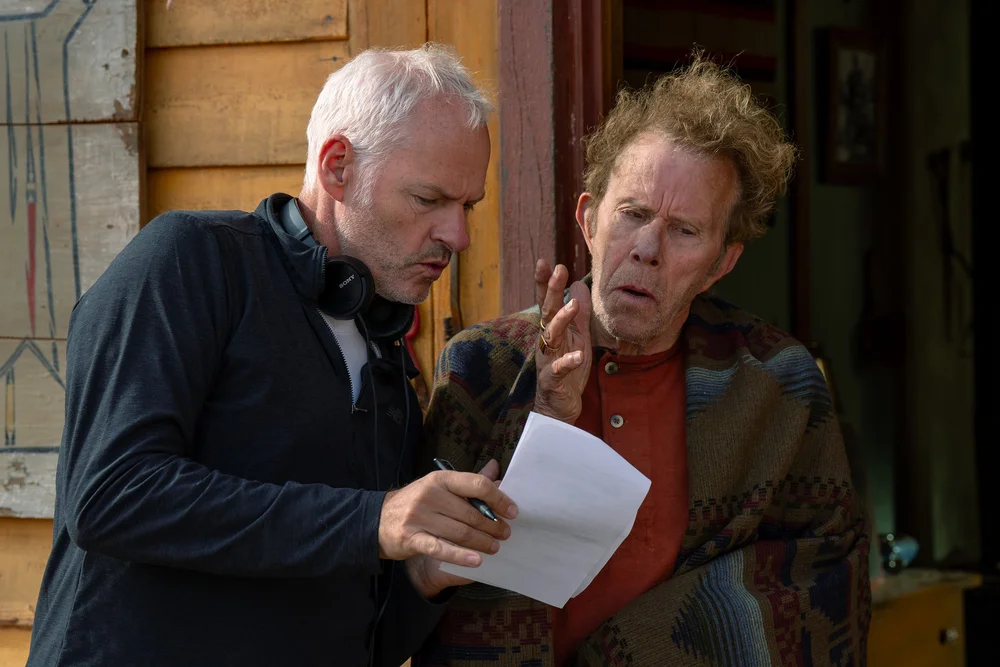
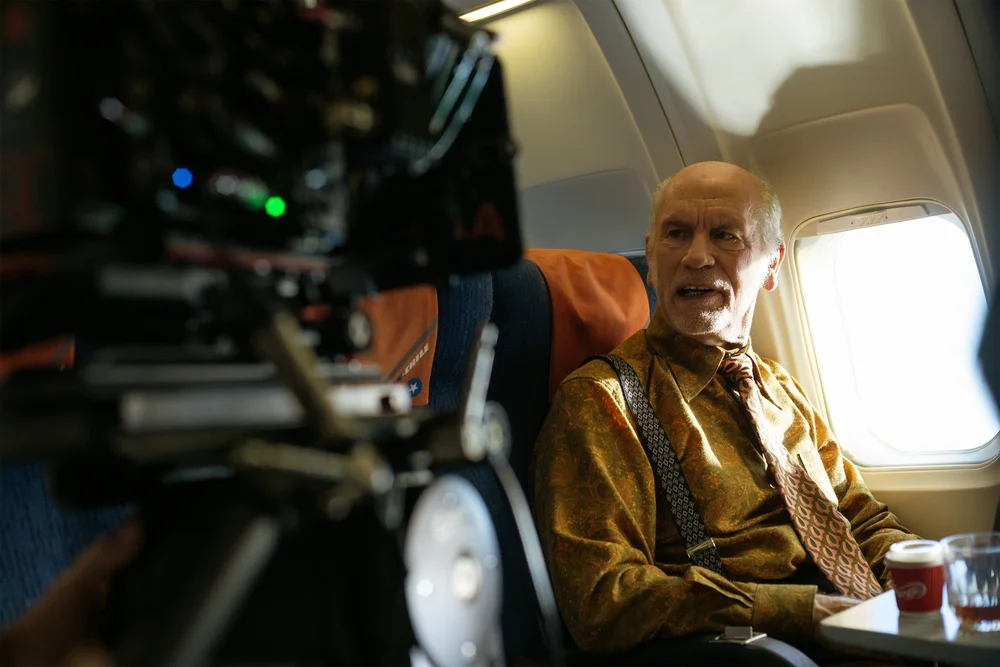
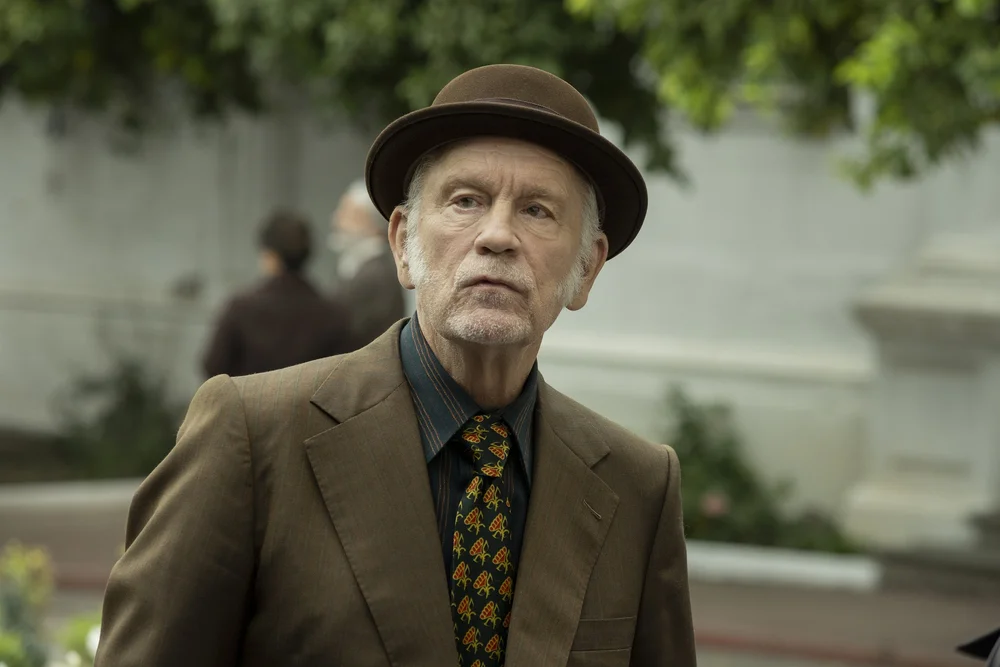
More often than not, the talent and prowess we remembered them for have never vanished. It just takes the right material and opportunity. Like Frances McDormand and Brendan Gleeson before Malkovich, Oscar-winning Three Billboards Outside Ebbing, Missouri and The Banshees of Inisherin filmmaker Martin McDonagh has created a tailor-made showcase for his chosen offbeat lead. Front and center alongside Academy Award winner Sam Rockwell at the age of 72, John gets to relish and enjoy his best role in decades with Wild Horse Nine. Applying the full breadth of his capabilities, the reminder of his eminence is immediate. Cue the WWE “You still got it” chants.
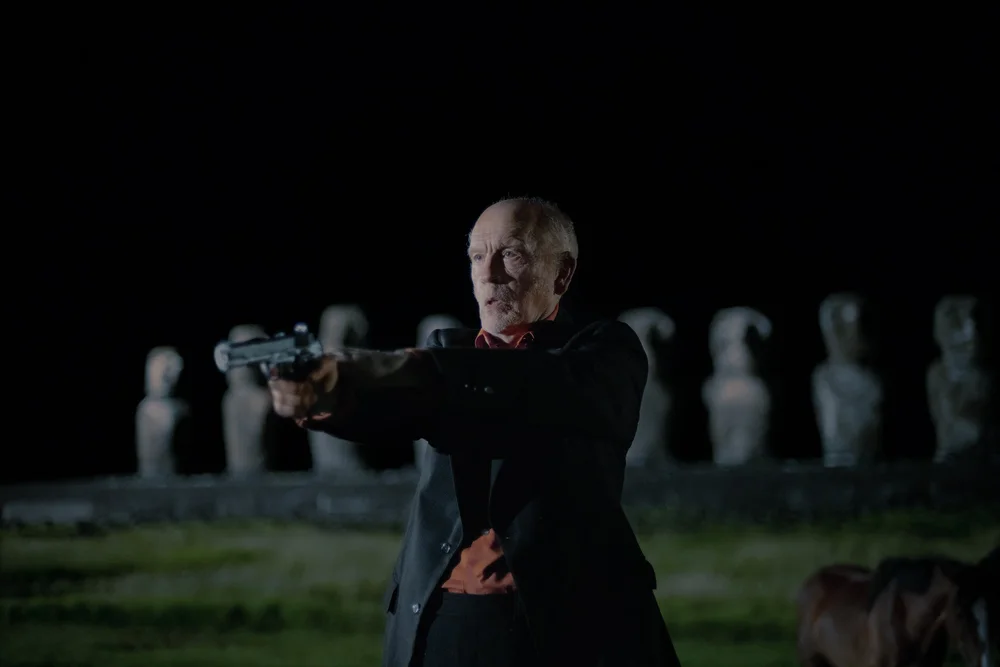
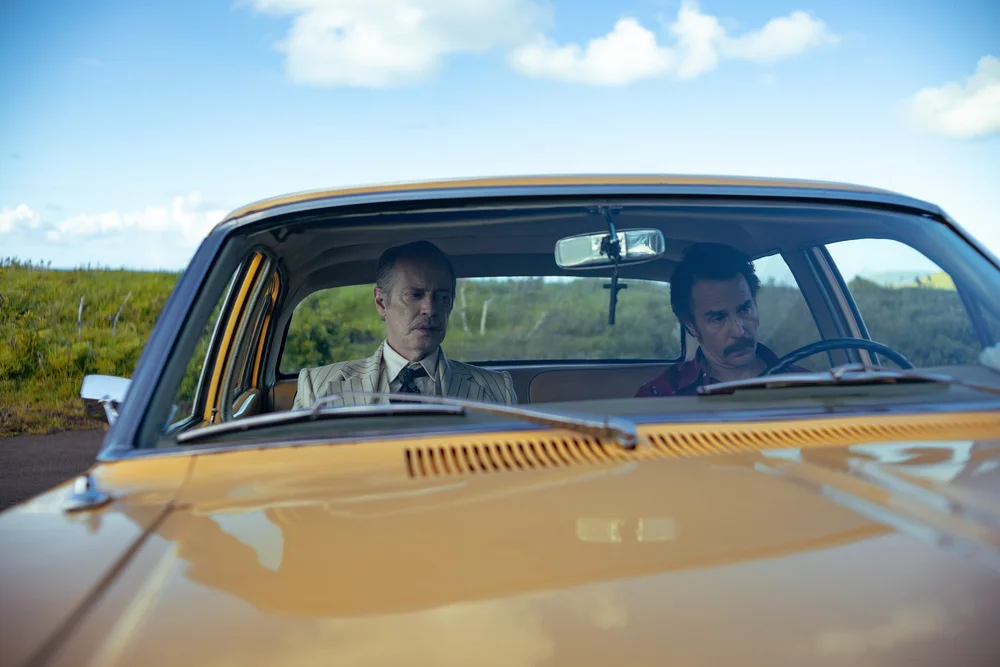
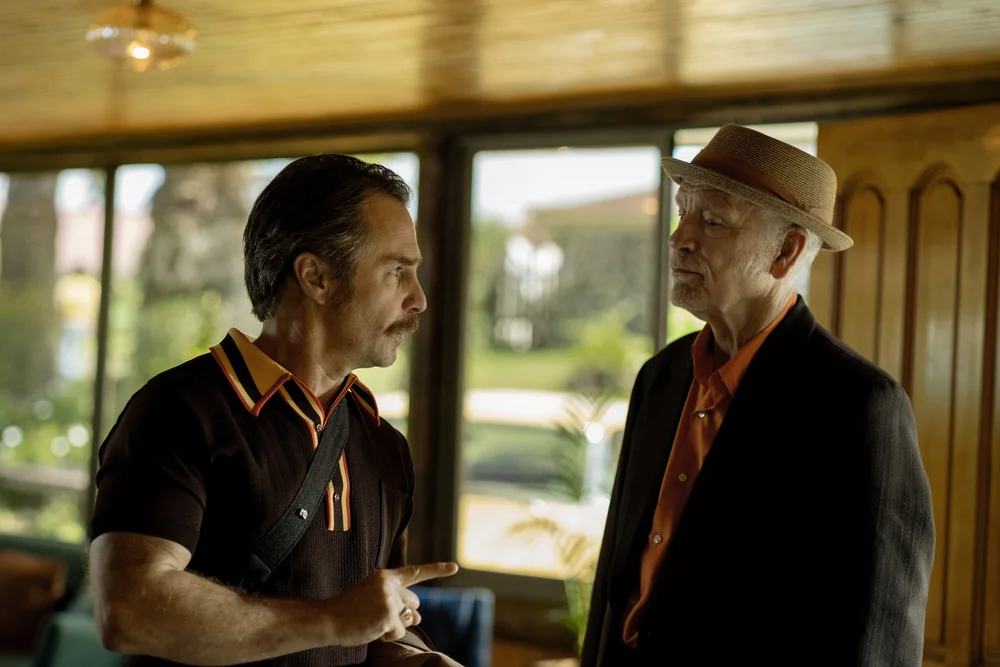
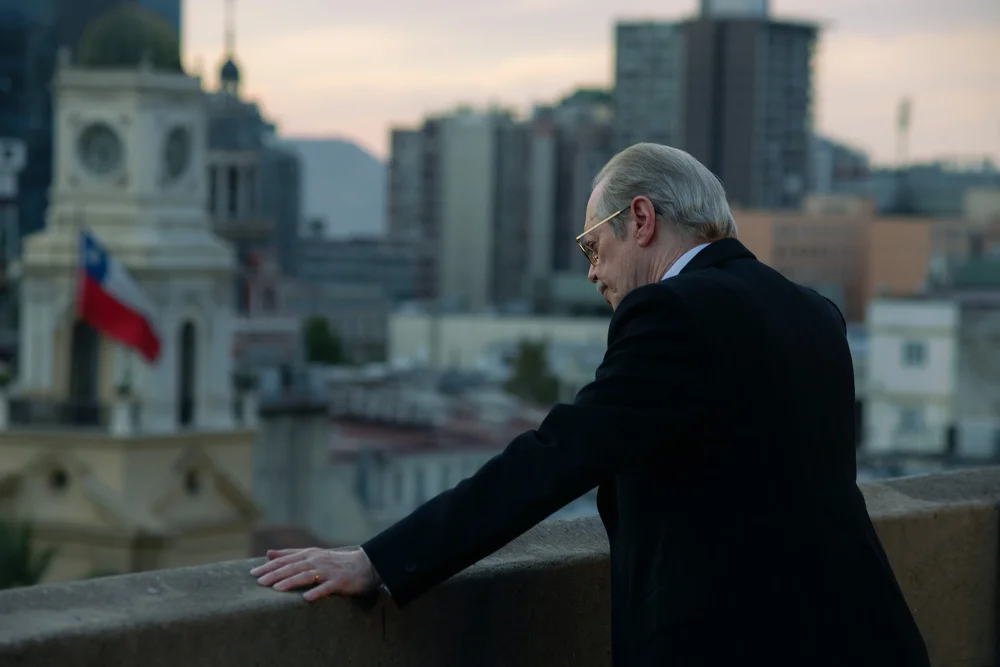
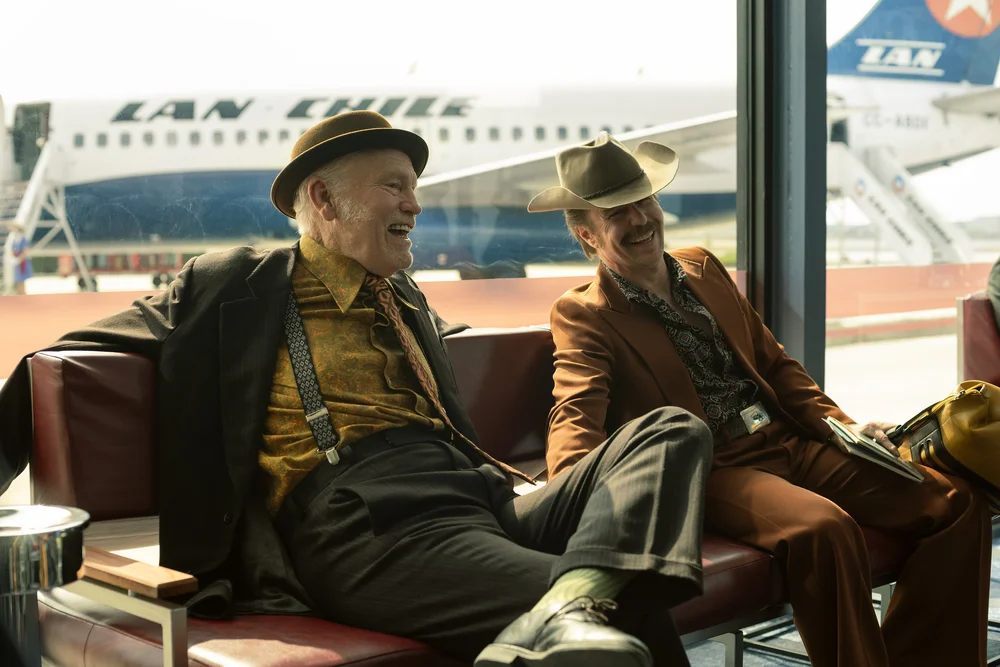
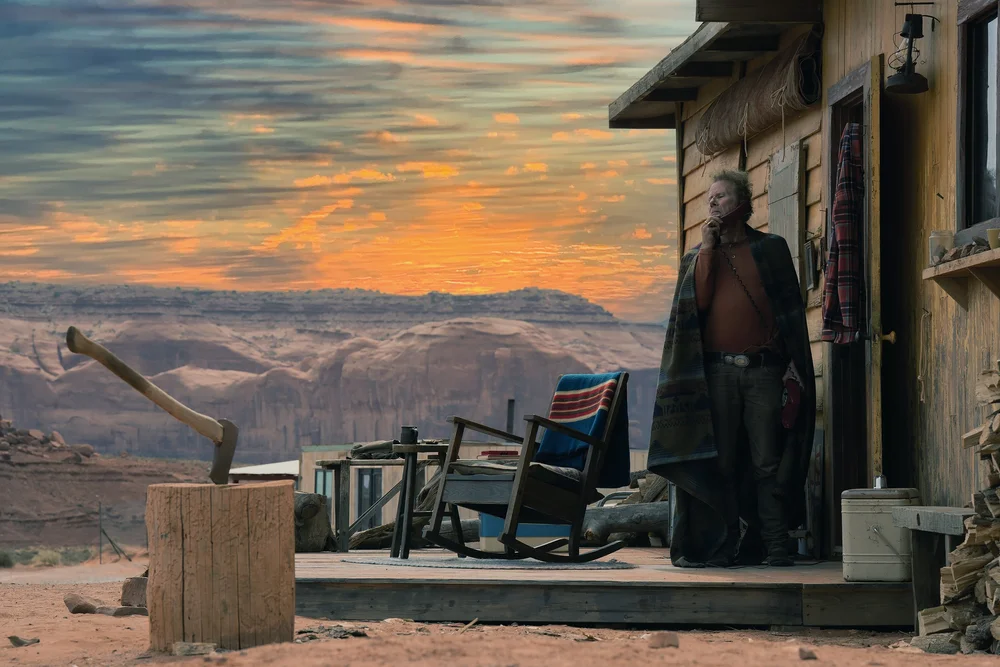
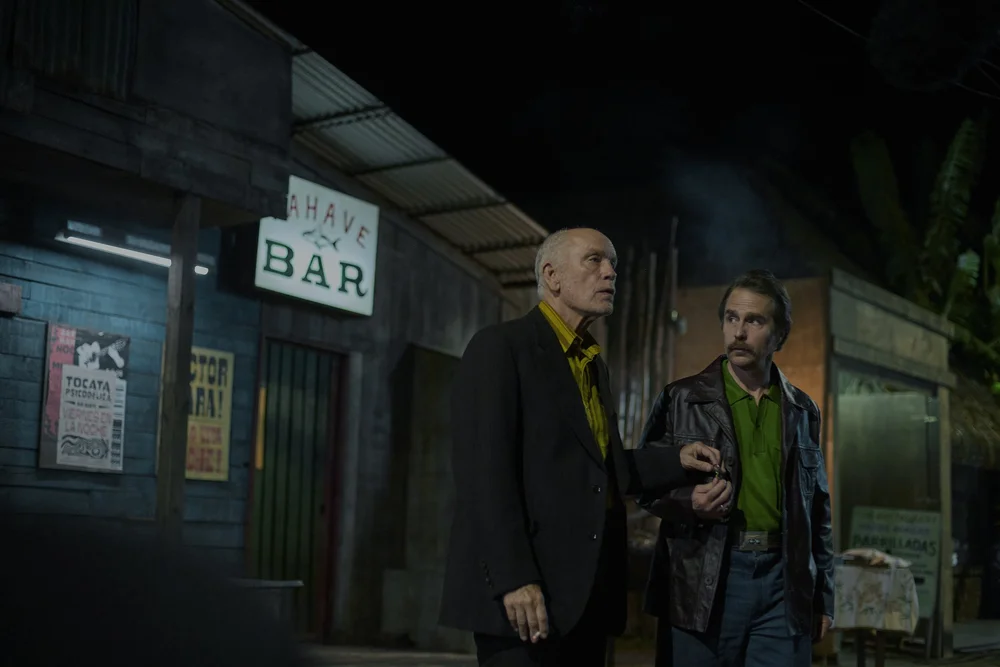
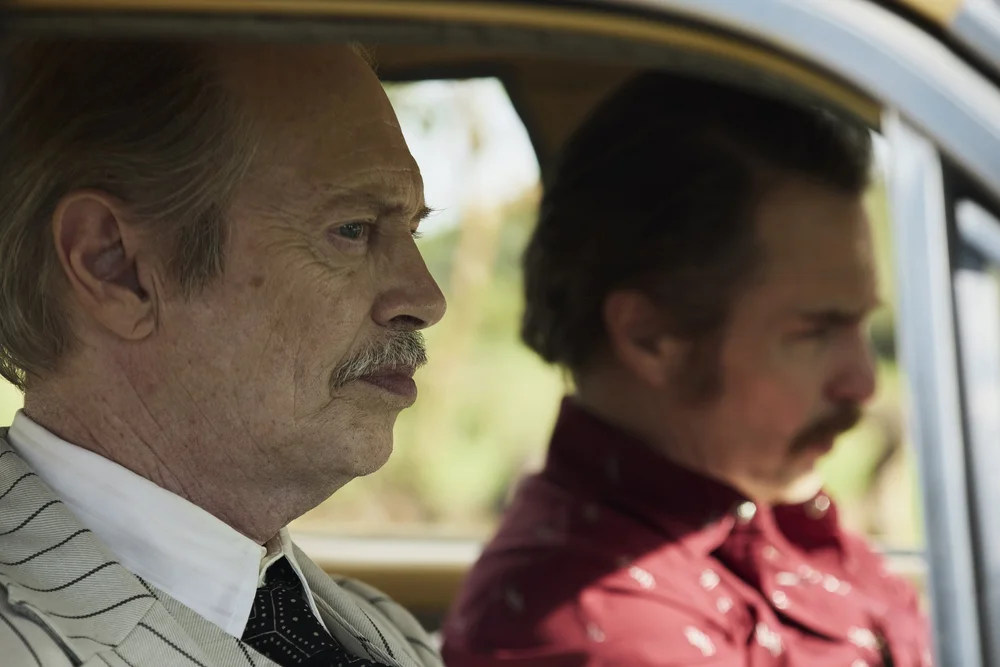
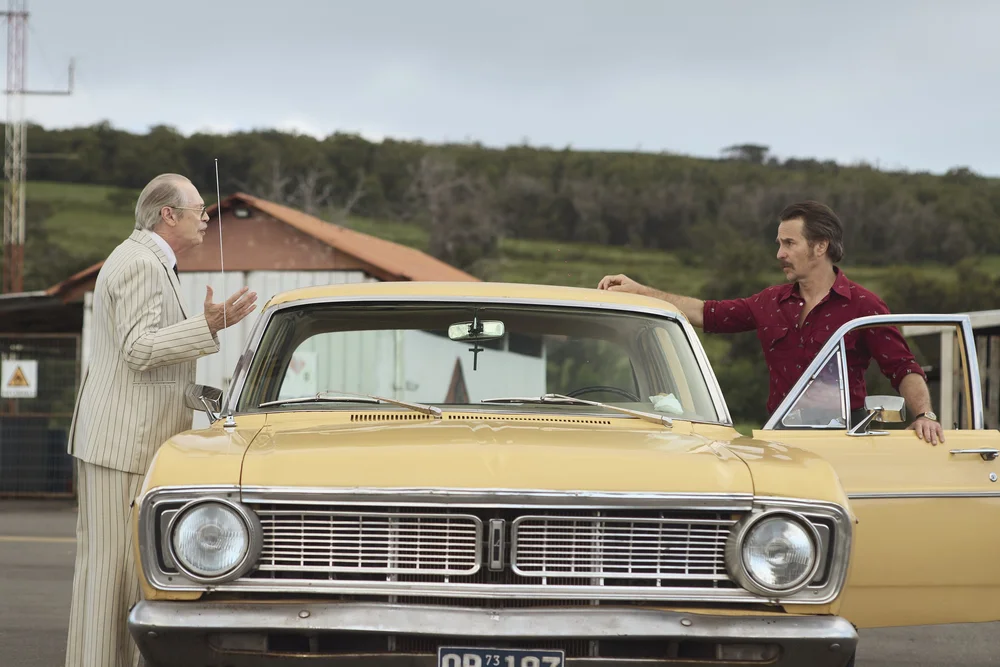
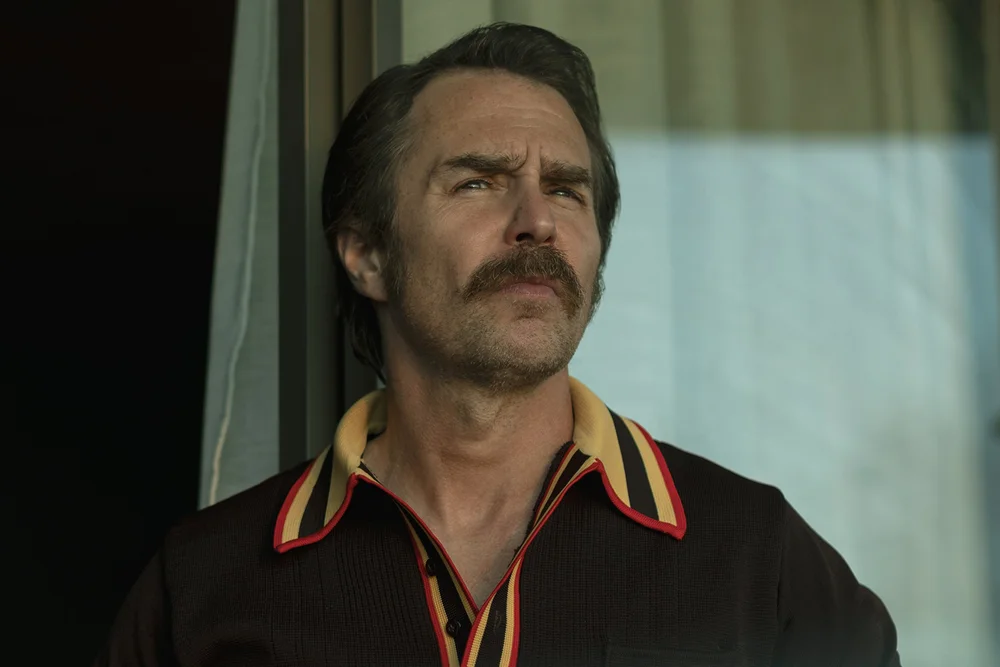
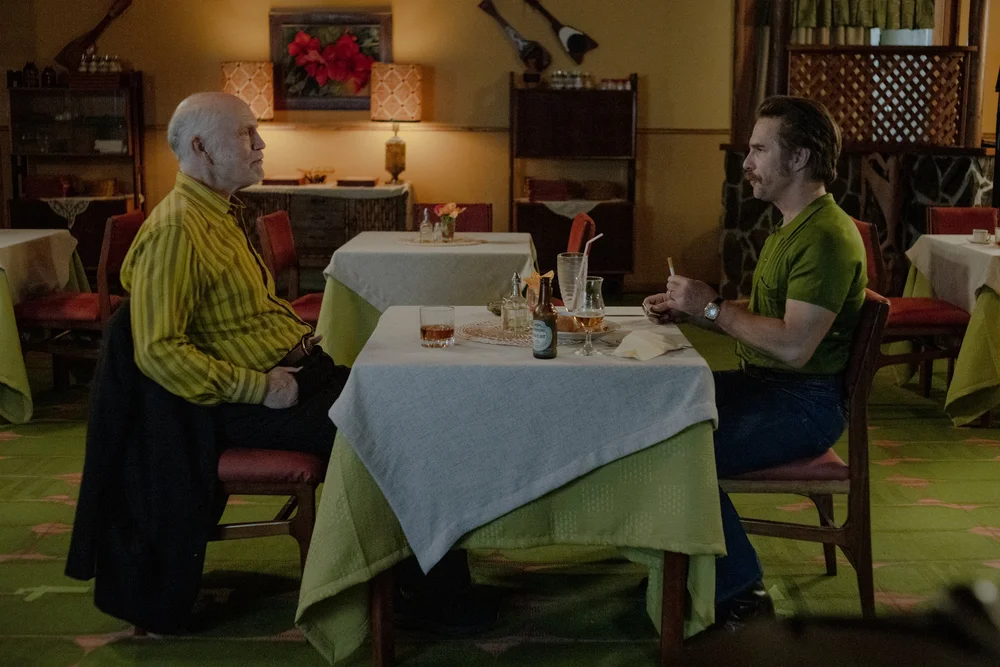
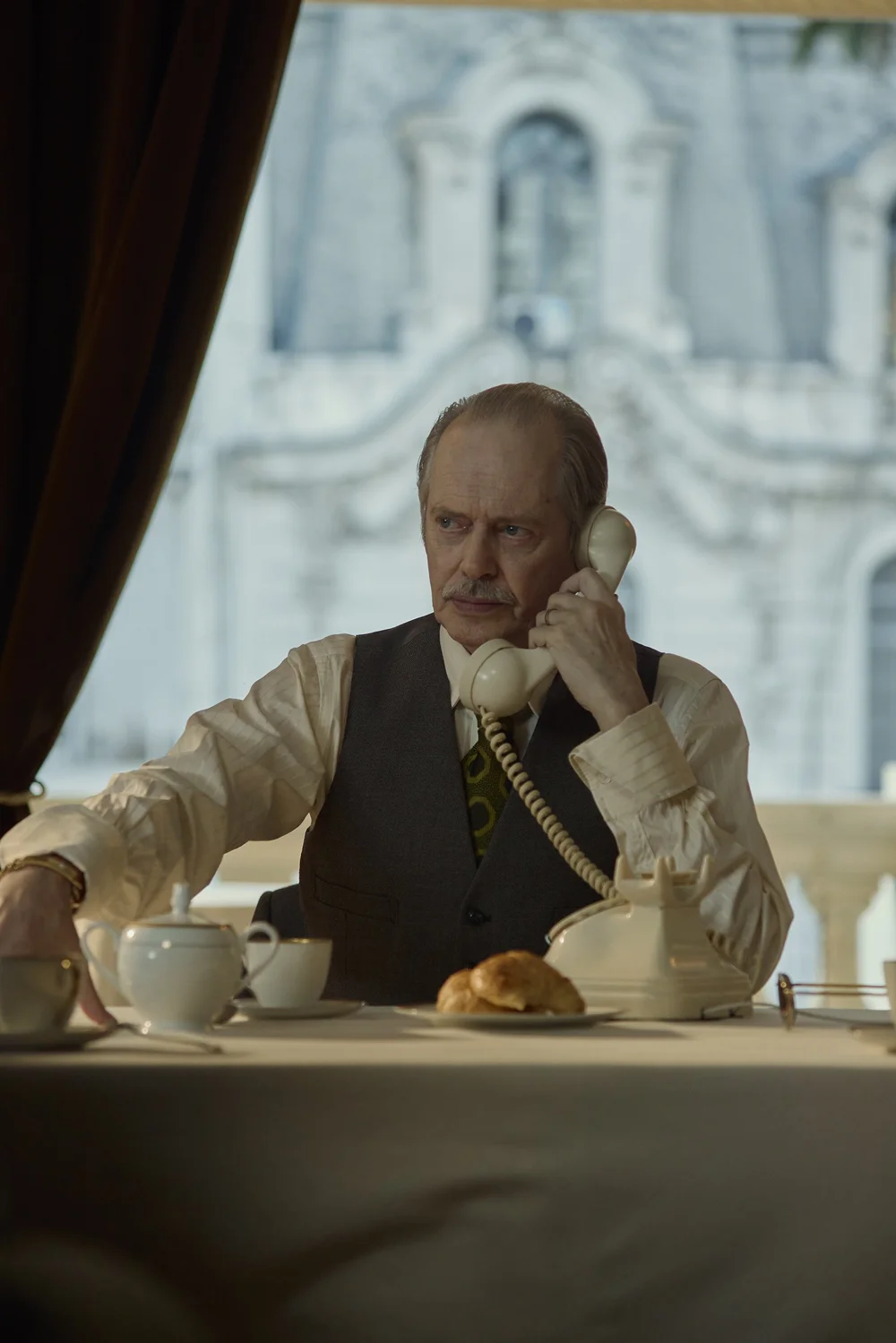
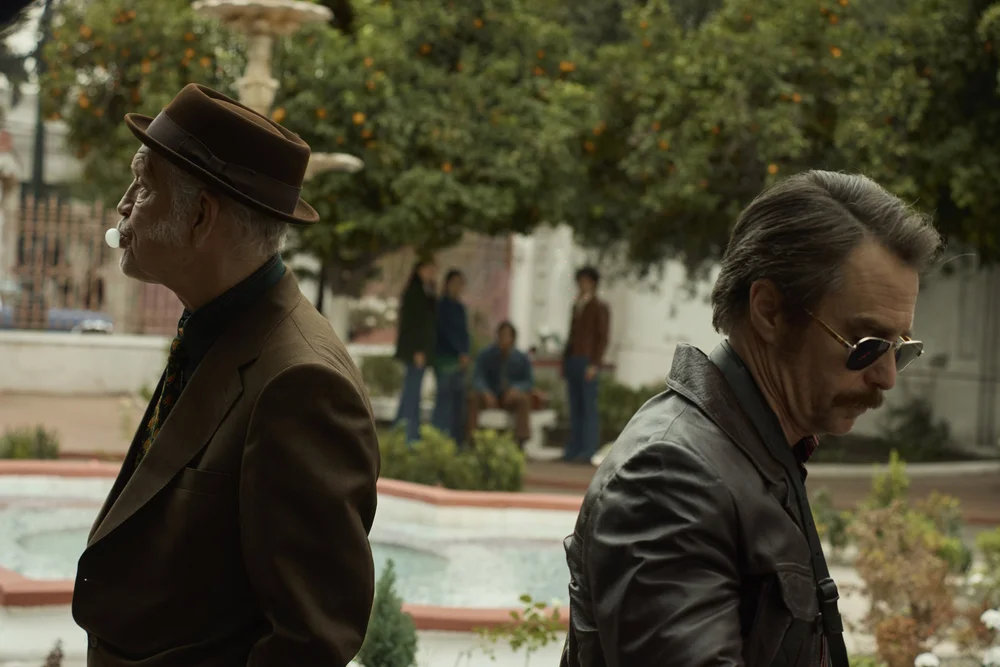
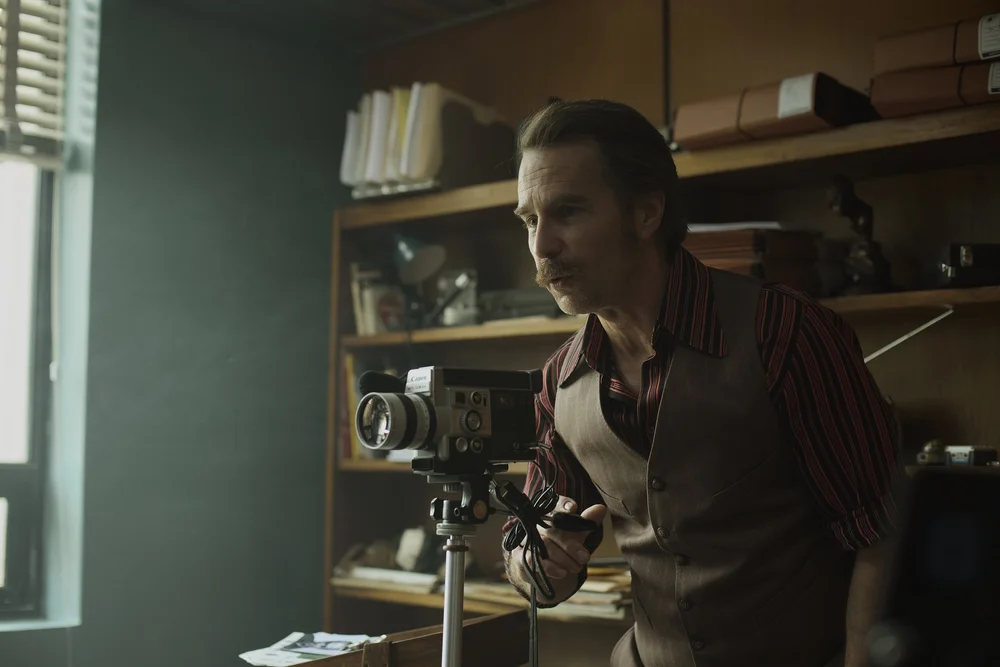
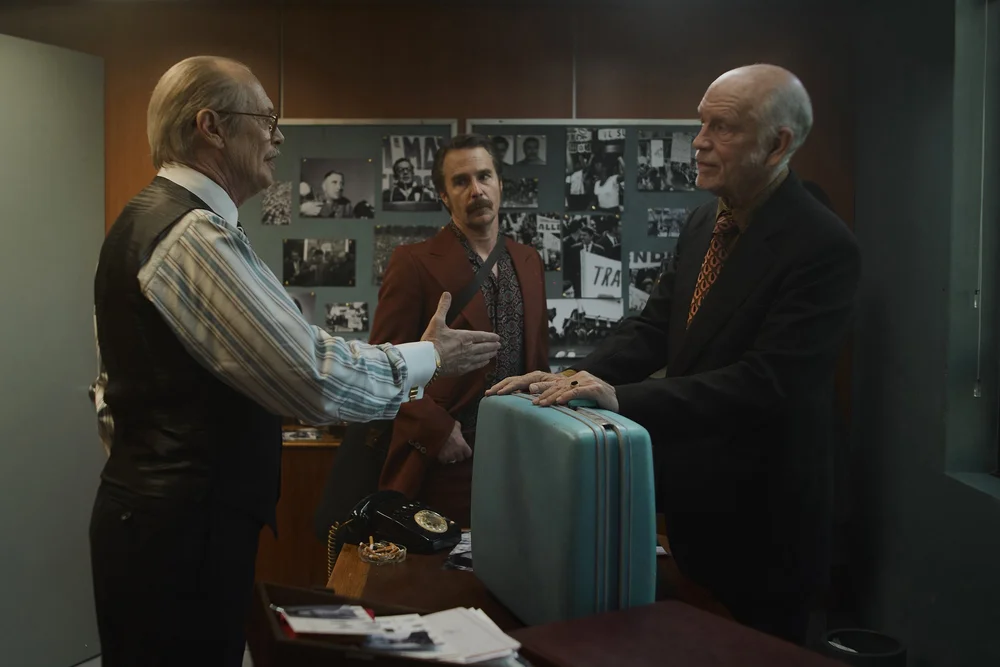
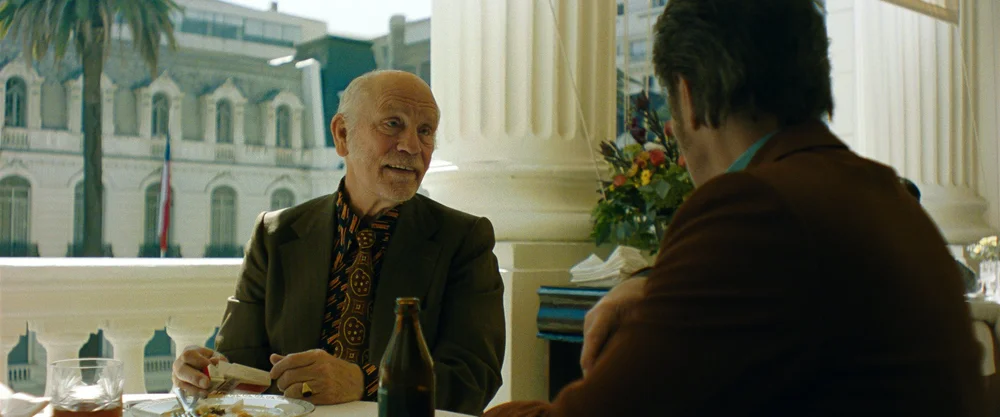
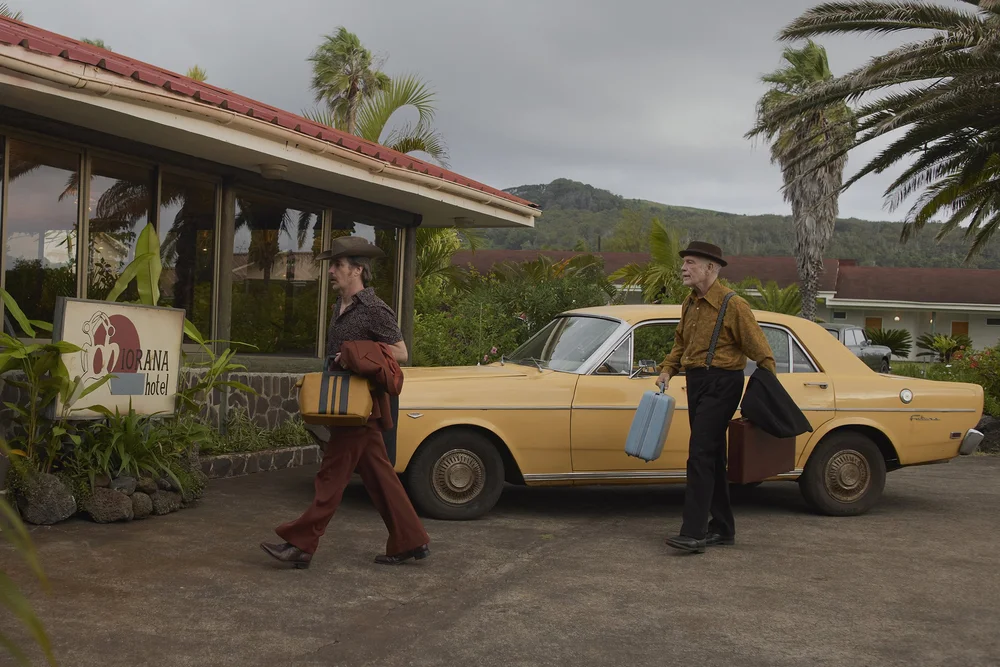
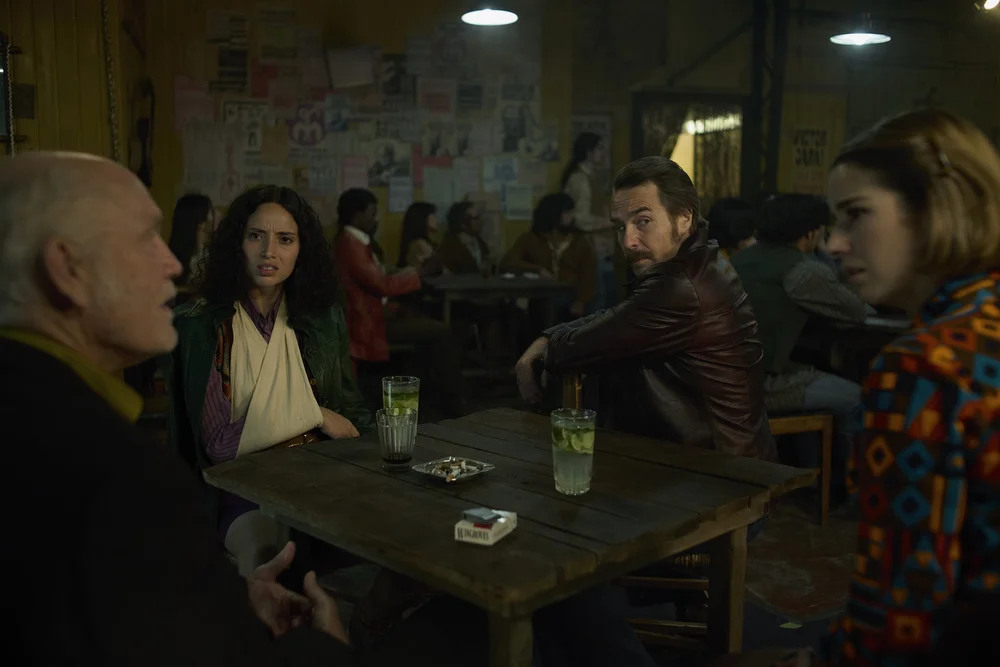
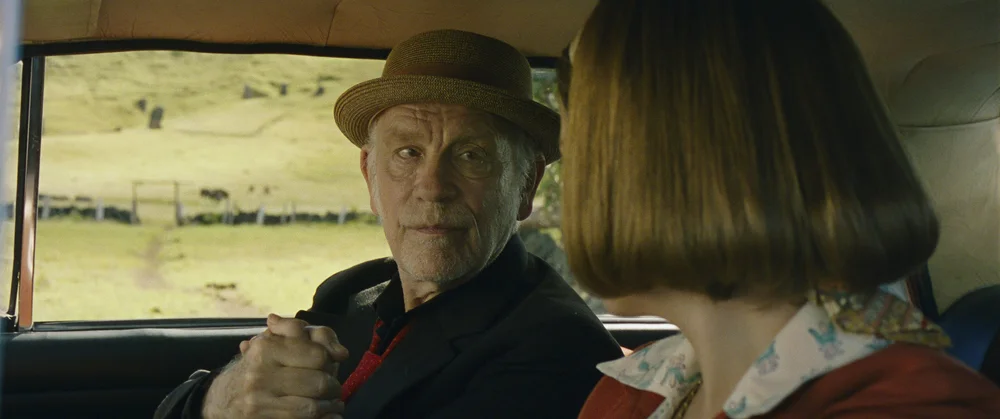
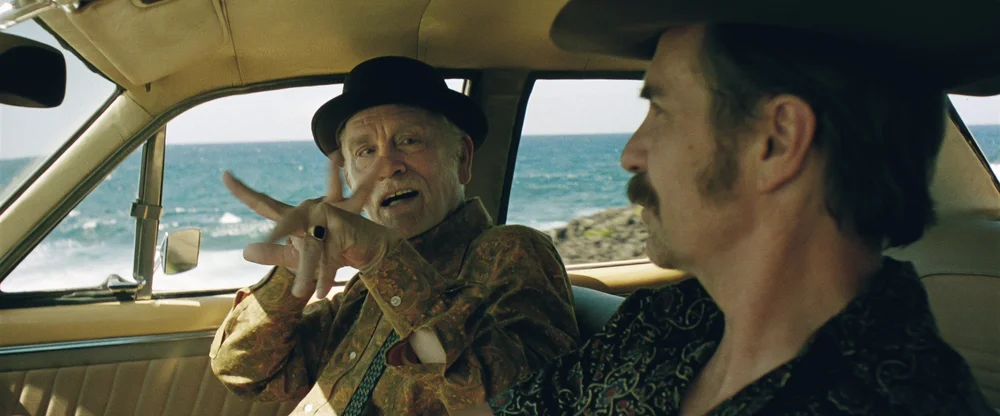
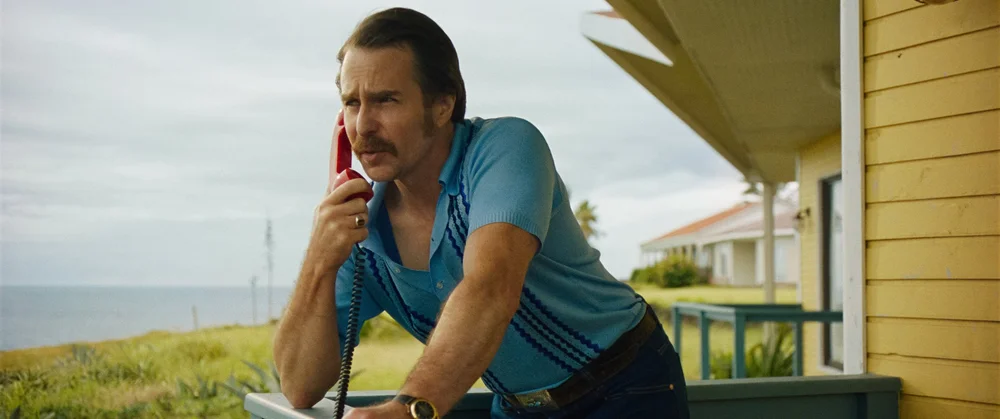
In Wild Horse Nine, Malkovich plays aging CIA agent Chris Carlisle, currently stationed in Santiago, Chile, in 1973 with his trusty partner Lee Chesterfield (Rockwell) under the lead of MJ (a very game Steve Buscemi), the bureau chief. Slurring clandestine history behind the scenes of that South American country’s coup d'état that same year, their characters are there to destabilize democracy, something Chris has vast experience conducting, including operations in Congo, Guatemala, and the internal legend that he was the gunman on the grassy knoll on a fateful day in Dallas, Texas, ten years earlier. Facing an overdue retirement and nursing terminal cancer, Chris is reflecting on his tumultuous career. He used to like the work, but he’s questioning and regretting old actions.
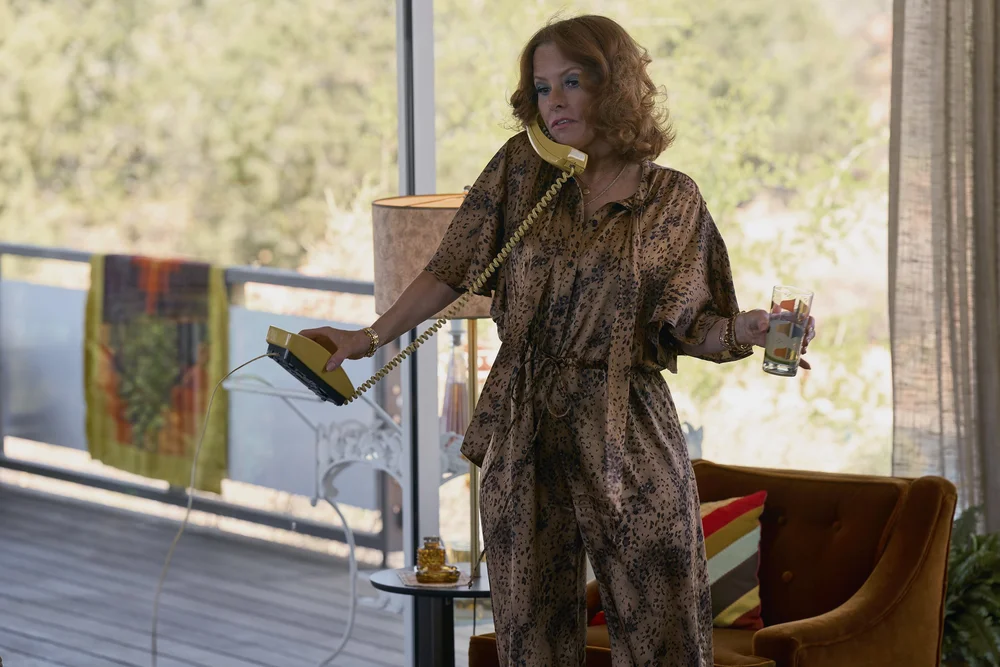
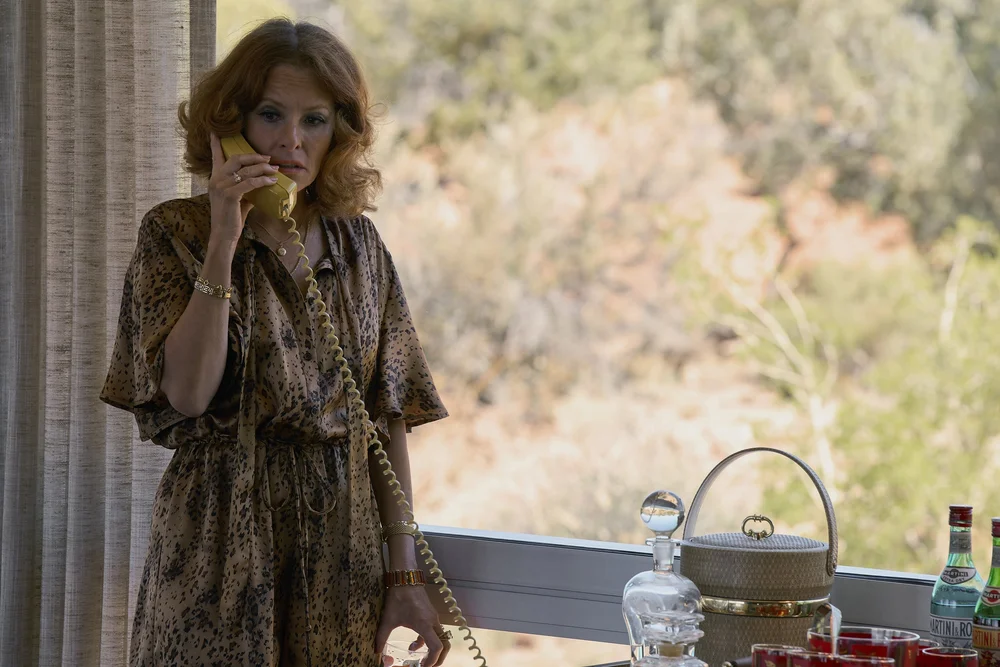
LESSON #2: THE HABITS OF A COMPULSIVE LIAR— Call it an occupational hazard (or skill, from another perspective), but Chris Carlisle and Lee Chesterfield are world-class liars. Chris specializes in creatively inaccurate asides, waxing on about trivia and stories on any number of topics, be it cheese, geography, or terrorist history. As the audience, our challenge, even when we know they’re spies and expect trickery, is spotting the lies versus the truth when we see these characters outside of a proverbial “mission.” While such verbal creativity is a necessity and can lead to infiltrative gain, the moral carelessness and apathy have bled into their everyday lives. As it turns out, this habitual behavior has cost both men most of their personal relationships, like Lee’s beleaguered wife at home, Marge (Parker Posey), and the toll of that is showing when they can’t meet new people or even trust each other’s word after all their years together.
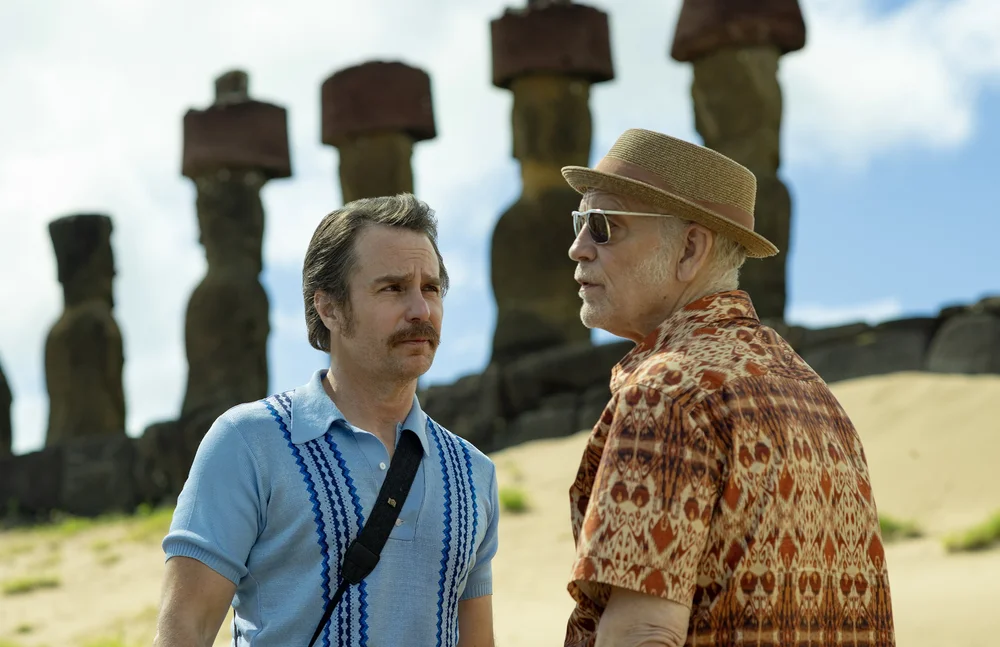
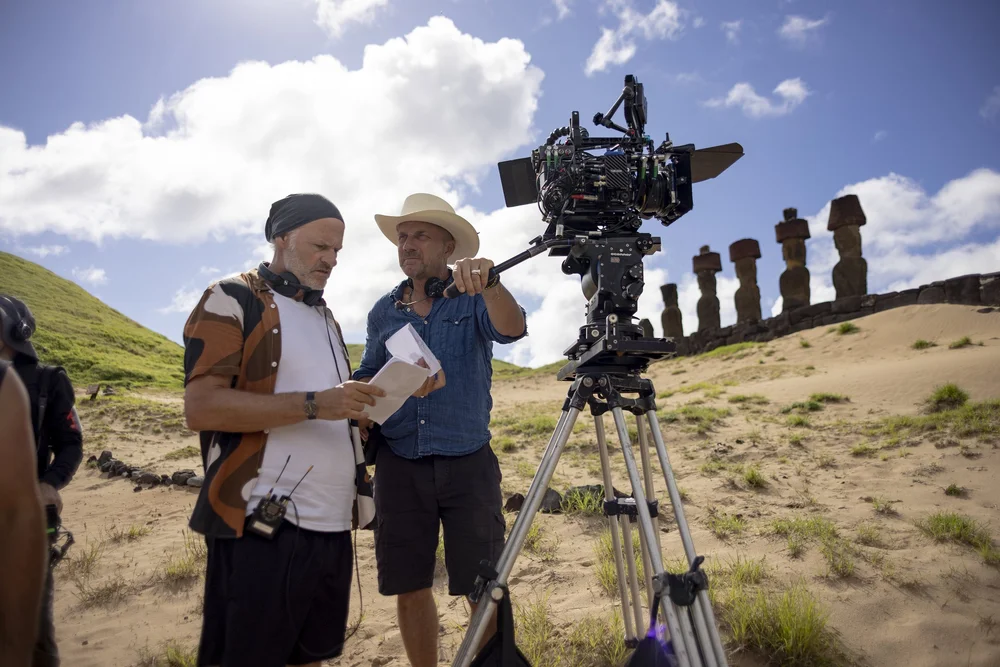
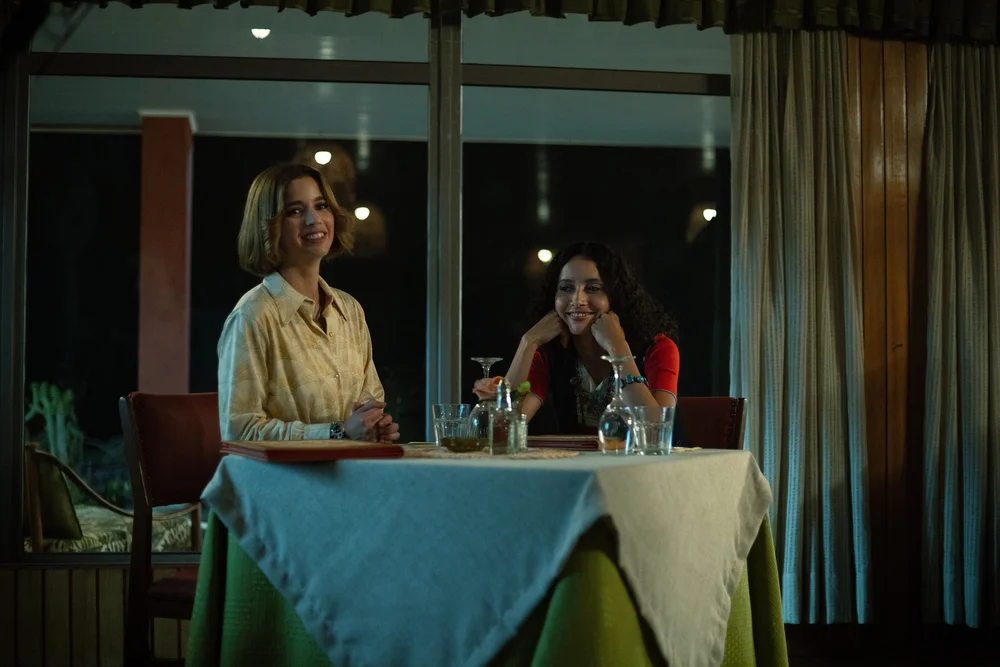
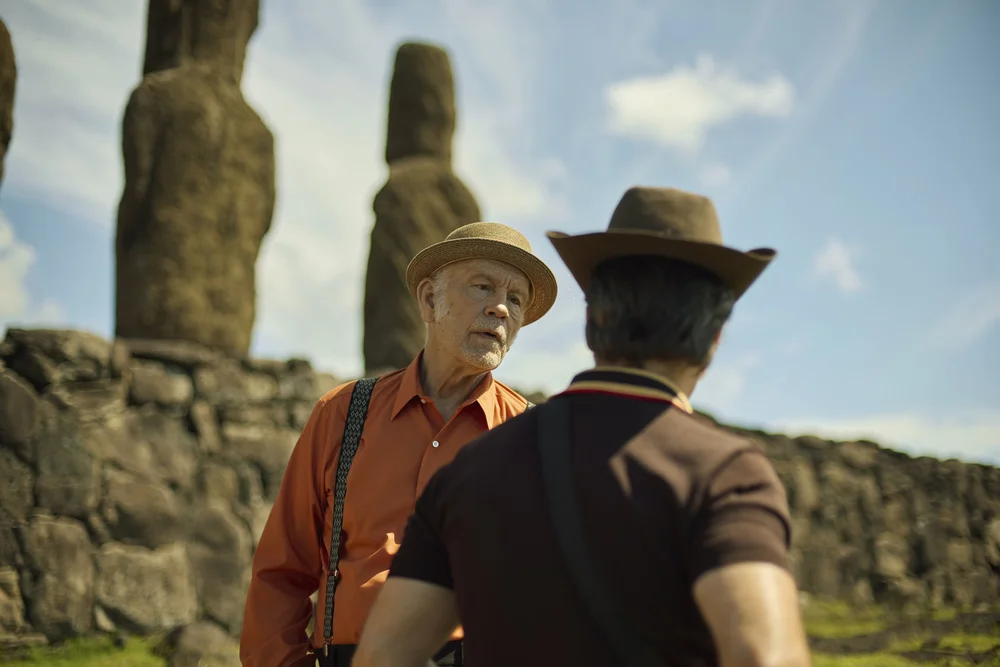
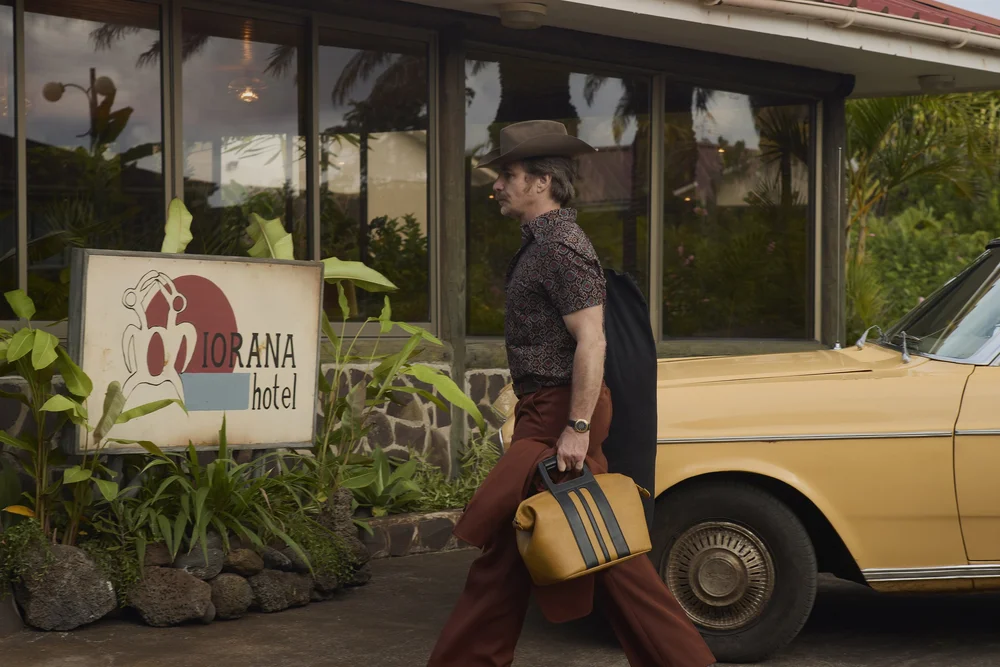
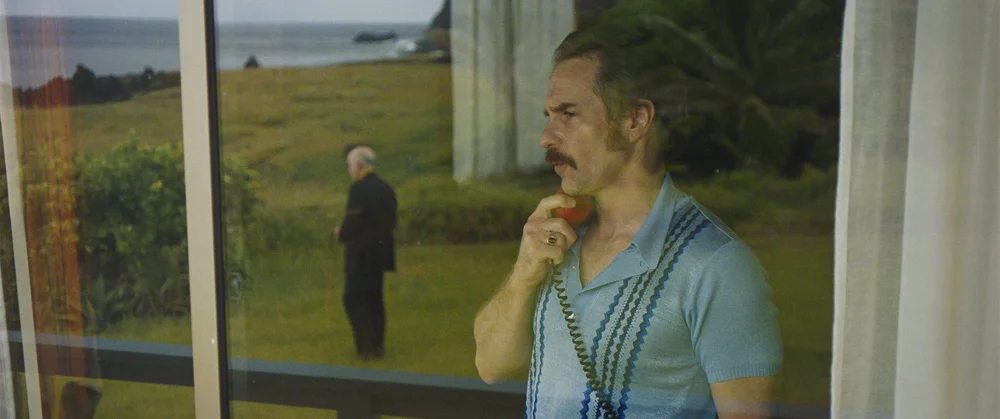
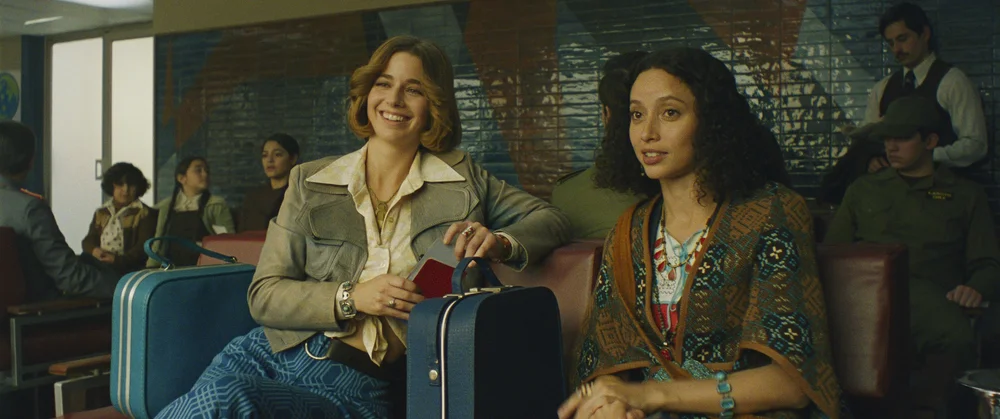
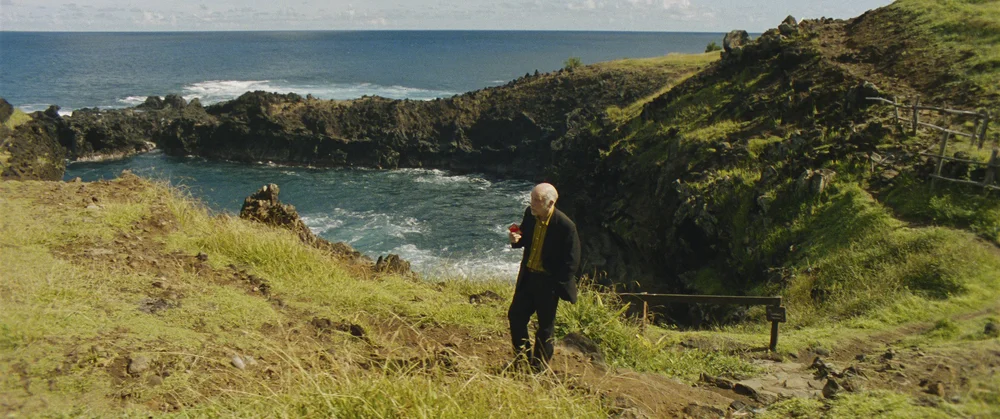
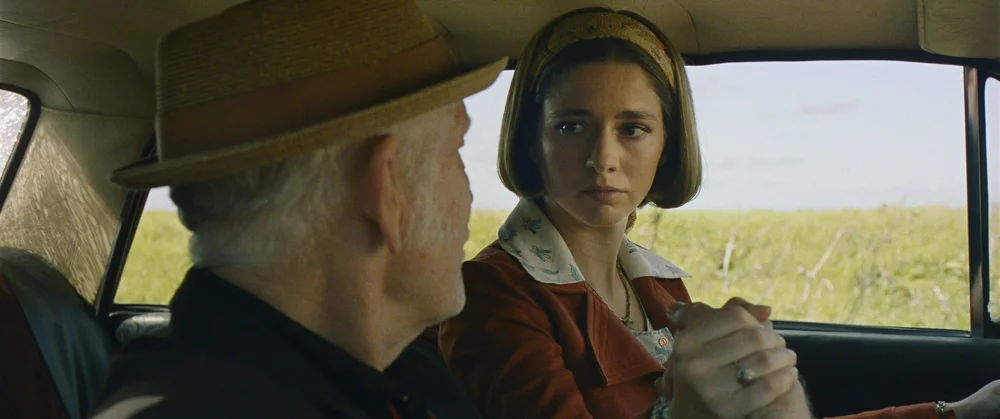
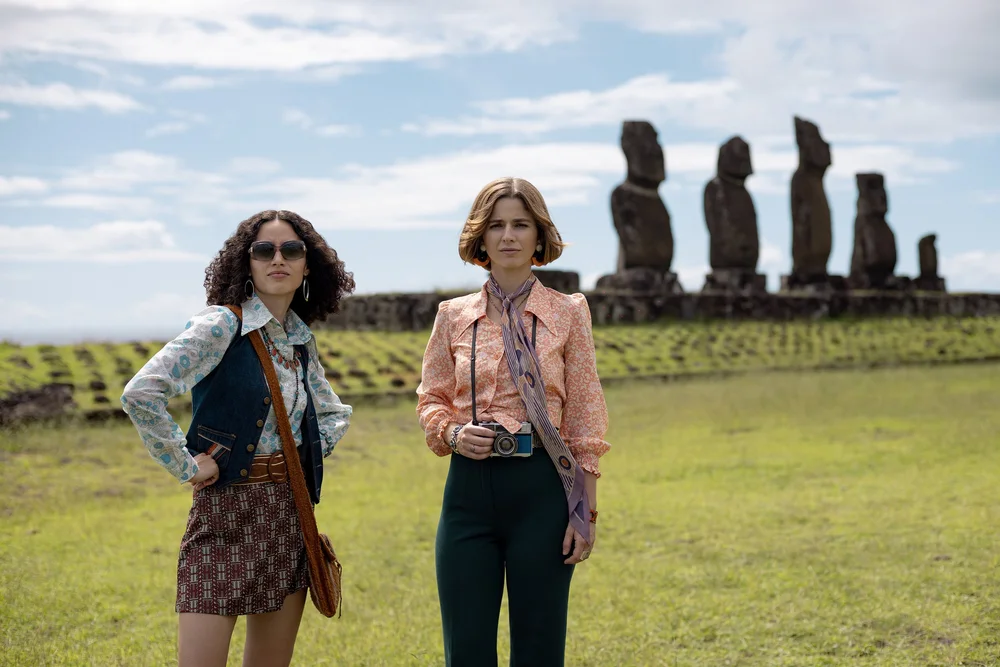
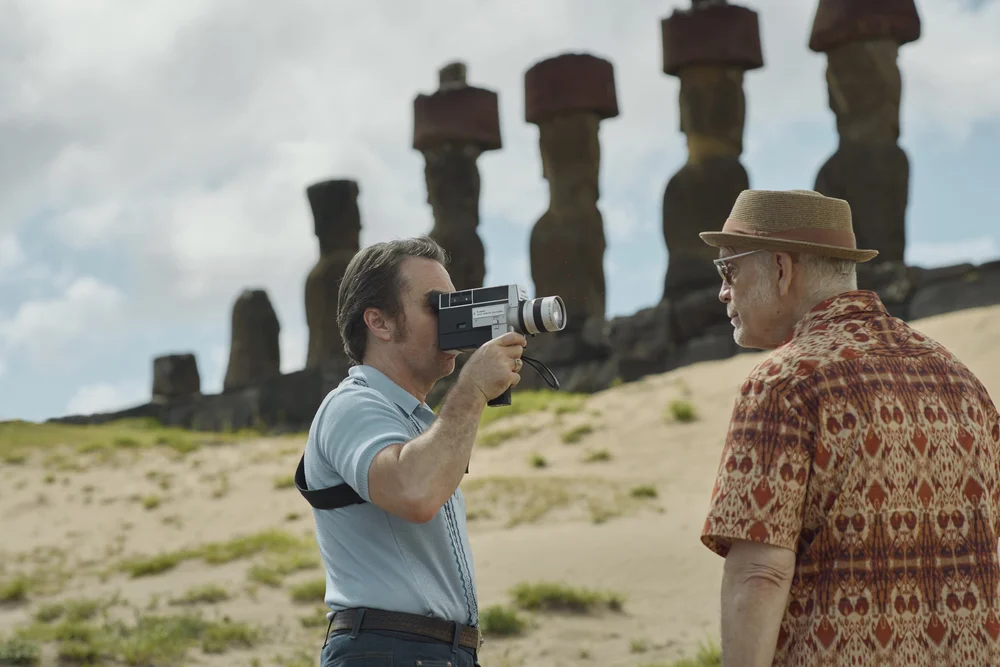
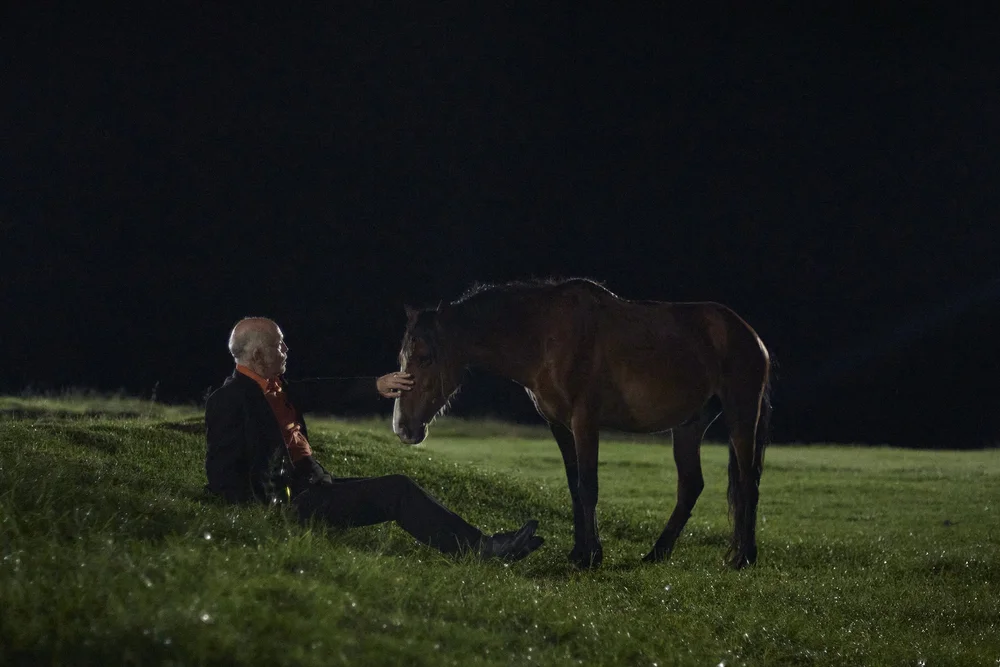
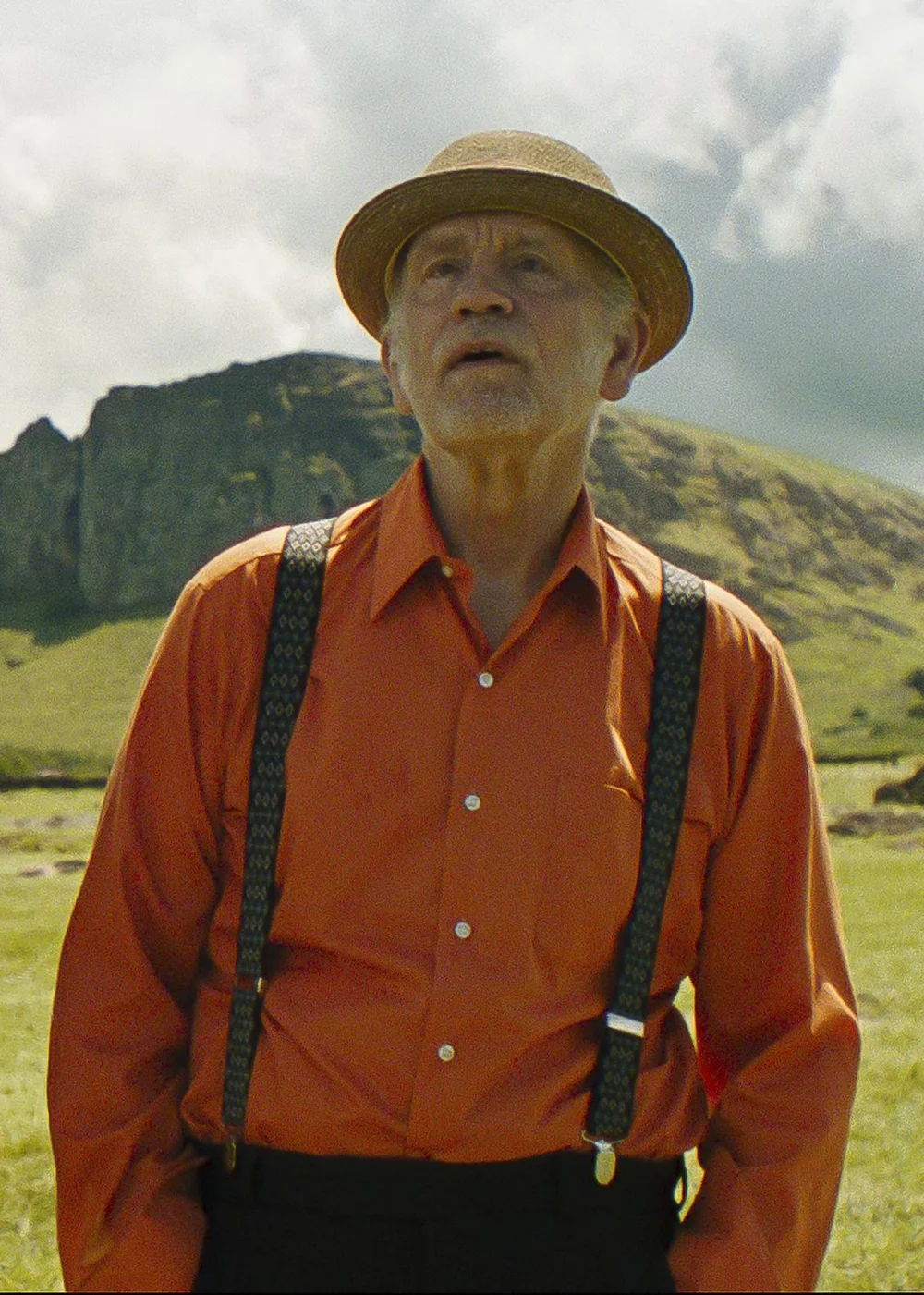
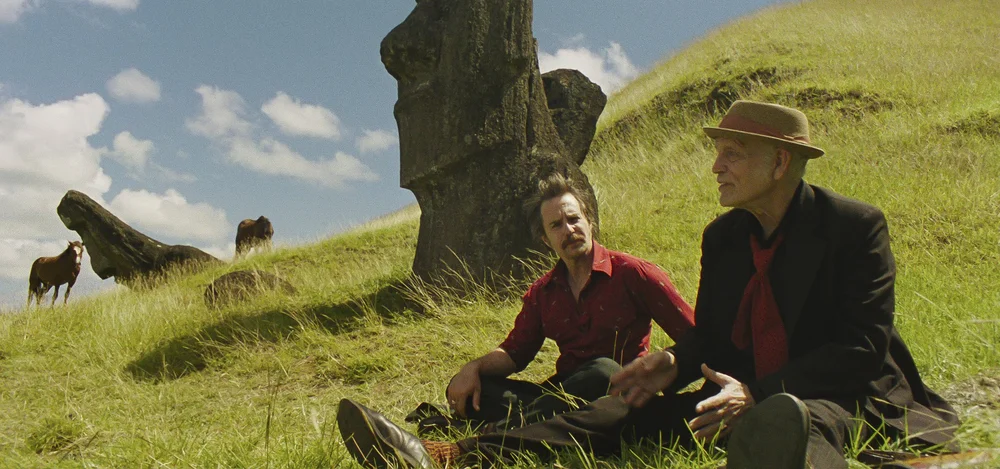
Turning Wild Horse Nine into a picturesque travelogue film for a stretch, fleshed out by pristine natural cinematography by McDonagh and MCU regular Ben Davis and a dreamy score from veteran composer Carter Burwell, Lee is accompanying Chris on a vacation to Easter Island to see the famous wild horses and moai statues. Along the way, they clumsily endear themselves to a pair of fellow travelers, in the form of two Chileans, Monica and Alicia (Kill the Jockey’s Mariana di Girolamo and Ailín Salas of The Astronaut Lovers, respectively). Treating the trip as a comfortable indulgence, Chris has an itch to write a memoir of his exploits, something MJ, knowing the conspiracy theories that would explode with those divulgences, wants to prevent. This holiday is also a last healthy hurrah for the ailing Chris as he stares down mortality.
LESSON #3: PROFESSIONAL LOYALTY VERSUS PERSONAL LOYALTY— Caught in the middle of a loyalty tug-of-war is Lee Chesterfield. On one side, MJ has tasked him with making sure Chris never documents or completes his autobiography at any cost. Yet, amid all the hassles over the years, Chris has always defended and covered for Chris’s lapses, and genuinely cares about him outside the unconventional workplace. More importantly, Chris has poignantly asked Lee to be the one to kill him before the CIA, dementia, or cancer can do it first. What lies ahead becomes the most severe test of true friendship, chalked up with the emoted shrug of “Sometimes you've got to do a terrible thing for the greater good.”
LESSON #4: GALLOWS HUMOR AT ITS FINEST— The result of this potentially violent conundrum is some of the rawest forms of comedy and tragedy smashed together in a serene place. True to every Martin McDonagh film since his hit feature debut of In Bruges, the Irish writer and director washes down every hard pill to swallow with a tall, frothy glass of dark comedy. McDonagh’s surly language can both incite or heal tension at any given moment. Death is on the doorstep of just about everyone involved—making survivability excitingly unpredictable—and we cannot help but grin between jaw drops.That effect only works with strong performers who understand McDonagh’s brusque wavelength.
It’s a marvel how well this entire Wild Horse Nine ensemble fits it in a tall tale, rife with twists, populated with rightly pessimistic people. In their supporting roles, Steve Buscemi, playing the “be professional” boss as if he time-traveled straight from Reservoir Dogs, and the properly uncouth and frazzled Parker Posey are game new additions for this pace of dialogue. Higher up the marquee, Sam Rockwell is a known quantity with his vivacious gift of gab, but we should not discount how a sizable amount of the heavy theatrics behind the crass comebacks and rat-a-tat dialogue made by this extreme exercise in gallows humor lie on his, once again, award-worthy shoulders.
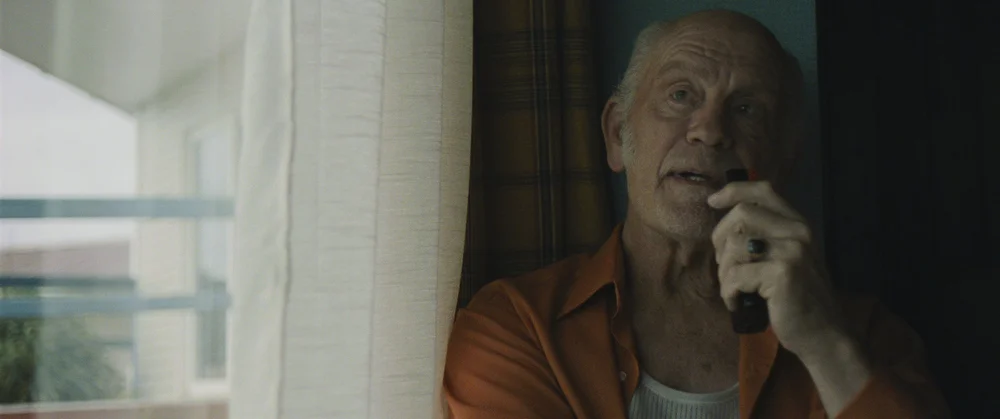
The true performative centerpiece of Wild Horse Nine remains John Malkovich. When necessary, his signature sternness as a longtime professional movie villain can still stare a hole through screen partners. You never doubt that Chris Carlisle is a formidable assassin or agent of chaos, yet there’s a man of venerable stature beneath that exterior matching both the aura of the seasoned character and the great actor playing him. Malkovich’s shifty range of mannerisms and flowery delivery, jolted up when shouting profanities or dialed down when quietly taking stock of circumstances, can disarm on-screen opponents and derail the emotional momentum and, moreover, the entire picture. The wringer of this combination of tickling ribs at one moment and breaking our hearts at others is extraordinary and, arguably, the best lead performance of the year.